

Patio furniture is commonly made from metal, wood, woven materials, plastics, and outdoor upholstery, often combined within one piece. To understand outdoor sofa sets, look at the frame, the visible surfaces, the cushion covers, and the cushion filling separately. A "rope" sofa may sit on an aluminum frame, and a teak table may stand on metal legs. Once you know what each layer is, comparing two sets becomes much easier.
This layered view also explains why two sets that look alike can feel very different in weight, upkeep, and comfort. The photo shows the surface; the frame, finish, and cushion construction decide how the piece lives on your patio. Below, we break down the most common patio furniture materials, what each does well, and where each fits best.
Table of Contents
Patio Furniture Materials at a Glance
Material | Typical strengths | Typical limitations | Often suited to |
Aluminum | Light, does not rust like steel | Can oxidize; very light pieces may shift in wind | Dining sets, sofas, frames under woven surfaces |
Steel | Rigid, substantial feel | Heavier; rusts if the coating is damaged | Bases, tables, sturdy supports |
Teak and other wood | Natural grain, natural oils in teak | Color changes with sun and rain | Tabletops, arms, accents |
PE wicker (synthetic rattan) | Woven look over a frame, no natural fiber | Quality depends on strand and frame | Sofas, chairs, sectionals |
HDPE plastic | Easy-care, molded or slatted | Simpler styling | Chairs, loungers, side tables |
Polypropylene | Lightweight, stackable | Feels less substantial | Seasonal and stackable seating |
Outdoor fabric cover | Color, texture, comfort | Fiber and coating vary | All upholstered pieces |
Foam fill | Support and comfort | Drying time varies | All upholstered pieces |
Metal Patio Furniture Materials: Aluminum and Steel
Aluminum
Aluminum is one of the most common outdoor frame materials, used both in exposed designs and hidden beneath woven surfaces. It is lighter than steel, so chairs and sofa modules are easy to rearrange, and it does not rust the way iron-based steel does. A powder-coat or similar finish protects the surface and defines the look, from matte black to soft gray. Check the finish description and joint construction before buying.
Steel
Steel gives furniture a solid, rigid feel and is often used for bases, internal supports, and hardware. It is heavier than aluminum and depends on its coating to resist rust, so inspect the finish and keep chips touched up. If you will move the furniture often, compare listed weights rather than relying on the material name; a heavy tabletop is awkward to carry even on aluminum legs.
Wood Patio Furniture: Why Teak Is Popular
Teak is a classic outdoor wood because it naturally contains oils. Left untreated, it typically weathers from warm brown to a silvery gray, which many people like; others use treatments to keep the original tone. The USDA Forest Products Laboratory's Wood Handbook notes that sunlight, water, and finish all shape how outdoor wood ages, so decide in advance which look you want.
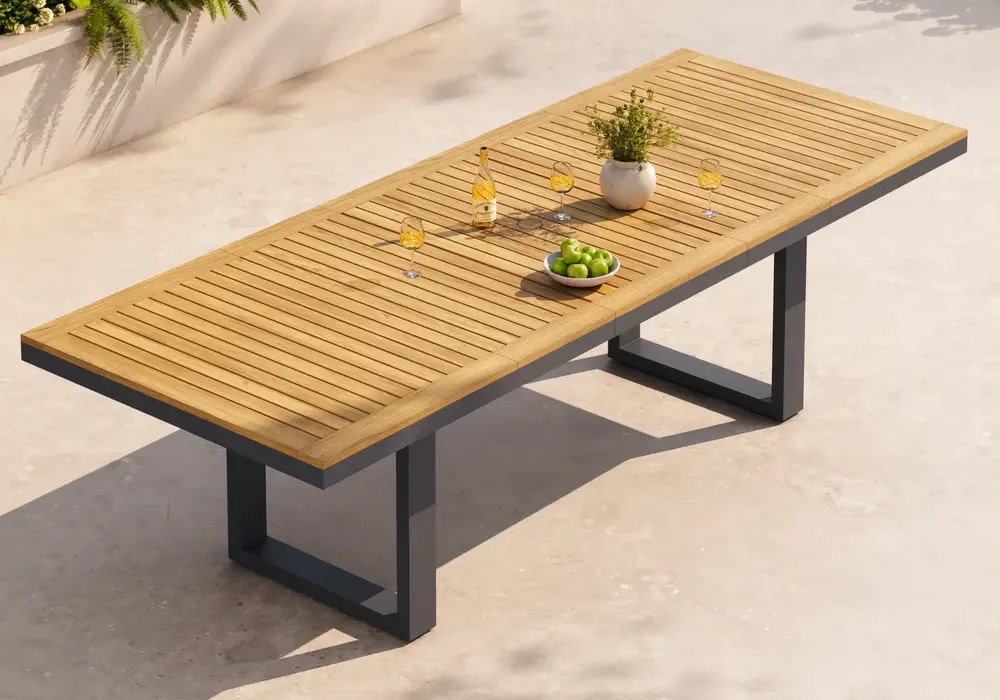
The Tevara outdoor extendable teak and aluminum dining table shows how one piece can combine materials by function: a teak top for the surface and an aluminum frame for support. Care for each part separately, and check whether the listing describes solid wood or veneer.
Wicker, Rattan, and Rope: Woven Patio Furniture Materials
Wicker vs. Rattan
Wicker describes a weaving technique, not a single material. Rattan is a natural plant fiber, while most outdoor wicker uses synthetic strands, usually polyethylene, woven over a frame. If the material matters to you, check the strand type in the specification instead of judging by look.
Rope-Weave Furniture
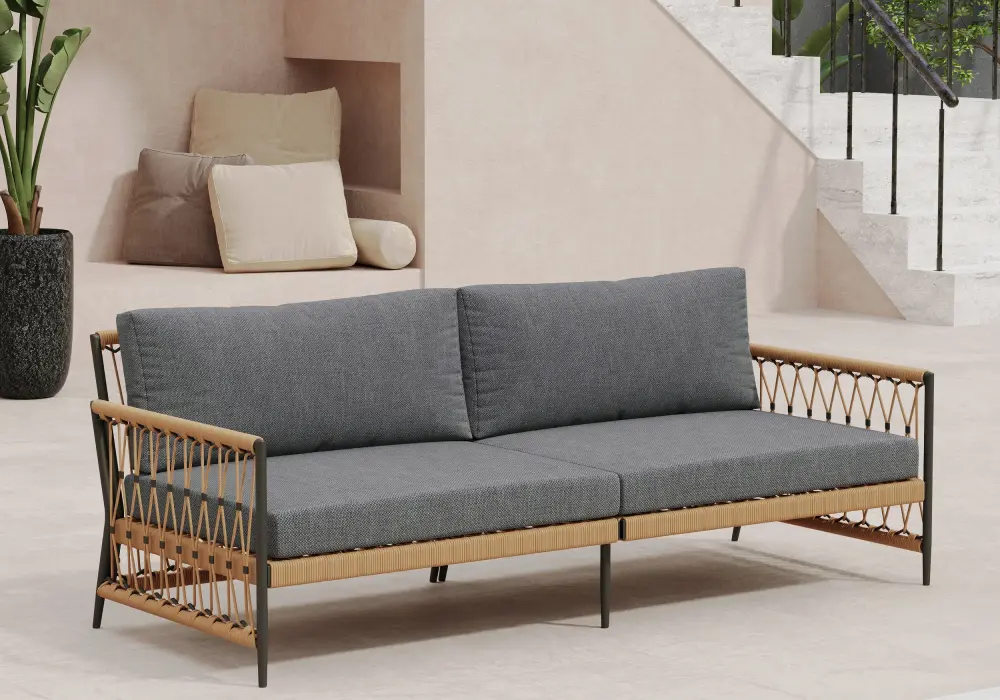
Rope furniture uses woven cord as a visible surface, typically over a metal frame. It delivers a soft, textured look that suits lounge seating. The Ropipe three-seater outdoor rope-weave and aluminum sofa is a good example of how the layers separate: an aluminum frame, a rope-weave design, foam-filled cushions, and removable covers.
Plastic and Resin Patio Furniture Materials
"Resin" is a loose commercial term that covers several different plastics. These are the three you will see most often.
HDPE (High-Density Polyethylene)
HDPE can be molded into chairs and loungers or cut into slats for tables and benches. It is popular for easy care, and color often runs through the material, so small scratches are less visible. Weight and stiffness vary by design, so check the stated weight capacity.
PE Wicker (Synthetic Rattan)
PE wicker is made from extruded polyethylene strands woven over a frame, and it is the material behind most "all-weather wicker" sofas. The frame beneath, usually aluminum or steel, determines structure and weight, so always identify both.
Polypropylene
Polypropylene is a lightweight plastic common in molded, stackable chairs. It is easy to move and store, which suits a seasonal patio. Look for UV-stabilized formulations if the chairs will sit in direct sun.
Glass and Stone-Type Tabletops
Many patio tables pair a metal or wood base with a glass or stone-type top. Glass gives a smooth, easy-to-wipe surface and suits dining tables where spills are common. Stone-type tops add visual weight and a more solid feel, but they also add weight, so check the table's listed dimensions and how it is supported before you plan where it will sit.
Outdoor Cushion Materials: Covers and Fillings
Cushion Covers
Outdoor cushion covers are typically made from polyester, acrylic, or polypropylene fibers. Solution-dyed fibers, where color is added before the fiber is formed, are popular because the color runs through the strand and resists fading. Water-resistant and waterproof are not the same thing: resistant fabrics shed light moisture, while waterproof construction blocks it more fully. Fabric makers such as Sunbrella distinguish these constructions in their own ranges, which is why the exact fabric matters.
Cushion Fill
Foam is the most common filling. Its construction affects how quickly a cushion dries after rain, so cushions in frequently wet spots are best stored or covered. A zippered cover is easy to remove, but always follow the care label for washing and drying.
Mixed-Material Patio Sets
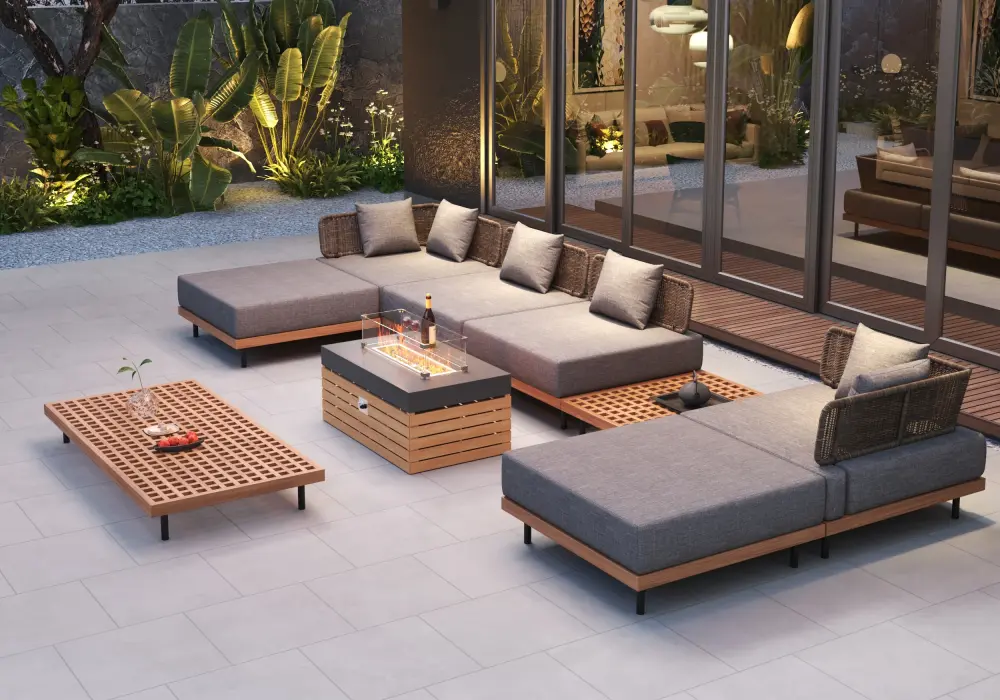
Many sets combine several materials at once. The nine-piece outdoor teak modular sofa set with a fire pit pairs teak and aluminum with upholstered cushions and a separate fire-pit table. Keep a short care list for the frame, wood, fabric, and fill, and follow the fire pit's manual for placement and clearances.
Best Patio Furniture Materials by Setting
Covered Patio or Porch
Shelter gives you the most freedom. Upholstered rope-weave seating like the Ropipe sofa works well because the cushions stay drier, and a teak tabletop fits nicely as long as you accept its natural color change. Wicker and fabric-heavy sets also look their best when protected from constant rain.
Poolside
Splashes, sunscreen, and chlorinated water call for surfaces that wipe clean easily. Coated aluminum frames, molded plastics, and quick-drying fabrics are sensible starting points. A glass-top or teak-and-aluminum table like the Tevara is easy to rinse after a pool day. Ask the manufacturer about chemical exposure for the specific model.
Coastal Areas
Salt air is the toughest setting. Favor frames with a documented protective finish, rinse furniture regularly, and check hardware for wear. Confirm the manufacturer's coastal guidance for your chosen set.
How to Choose the Right Patio Furniture Material
Start with exposure: covered or open, year-round or seasonal. Then match the material to the use, with a wipe-clean top for dining and supportive, quick-drying cushions for lounging. Finally, pick materials whose upkeep you will actually do, and keep the component list so you can care for each surface correctly. A frame, a surface, and a cushion each have their own job, and the best patio furniture gets all three right for your space.
As a rule of thumb, choose aluminum or coated steel when structure matters most, teak when you want natural warmth, PE wicker or rope when you want a softer, lounge-style look, and HDPE or polypropylene when easy storage and low upkeep come first. Mixed-material sets give you the best of several worlds, as long as you treat each component on its own terms. If you are still comparing options, browse a few patio conversation sets and read each listing layer by layer: frame, surface, cover, and fill.
Frequently Asked Questions About Patio Furniture Materials
What is the most common material for patio furniture?
Aluminum is among the most common frame materials, often paired with woven synthetic wicker, rope, or teak, plus polyester or acrylic cushion covers.
Is wicker patio furniture always made from natural rattan?
No. Wicker is a weave, and most outdoor wicker uses synthetic strands such as polyethylene. Check the specification for the strand material and the frame underneath.
Is aluminum patio furniture maintenance-free?
Aluminum resists rust, but it still benefits from regular cleaning and an occasional check of the finish and joints. Near saltwater or pools, follow the maker's exposure guidance.
What is the difference between HDPE, PE wicker, and polypropylene?
HDPE is a molded or slatted polyethylene plastic. PE wicker is polyethylene strands woven over a frame to look like rattan. Polypropylene is a lighter plastic often used for stackable chairs.
Can I machine wash every removable outdoor cushion cover?
No. A removable cover simply unzips; the care label decides whether it can be machine washed, and at what temperature.