

How to keep a reclining sofa from sliding starts with working out what is actually moving: the whole sofa across a smooth floor, one section pulling away from its neighbor, or a rug shifting underneath. Once you know, check the base and support points against the instructions for your exact model, then add only non-slip pads that both the sofa and flooring manufacturers approve. With power reclining sofas, also keep cords and moving parts clear of the base. Avoid fixes that restrain the wrong part, such as screwing the sofa down or wedging it against a wall, and stop using it and contact the manufacturer if it rocks, tips, or makes a new noise.
Table of Contents
Identify the Movement Before You Change Anything
Notice when the problem happens during ordinary use. Does the sofa move when someone sits down, when a footrest opens, or when someone stands? Does it slide in one direction, or does one section drift away while the other remains still?
Inspect the space around the sofa without reaching into the mechanism. A footrest contacting a table or a base catching a rug edge may make the movement look like a grip problem. A sofa placed too close to the wall may also encounter an obstruction as it reclines.
Use a fixed room feature as a visual reference. If you need a floor marker, use only something the flooring manufacturer permits and remove it afterward. Do not put adhesive tape on a finish without checking compatibility.
What you observe | What to check first | Appropriate next step |
The entire sofa moves across a hard floor | Contact points, floor condition, and existing glides | Ask about compatible non-slip supports |
One sectional module separates | Supplied connectors and assembly | Reconnect only as the manual directs |
The sofa rocks before it moves | Loose, missing, or unsupported feet | Correct approved assembly issues or request service |
The rug moves with the sofa | Rug backing and underlay | Choose a compatible, stable rug setup |
Movement begins with noise or obstruction | Clearance and visible interference | Stop the cycle and consult the manufacturer |
Do not repeatedly cycle a sofa to “test” an unstable condition. Once the problem is apparent, stop and address it.
Check Assembly and Support Points
Locate the instructions for your exact model. A sectional may have feet or center supports that are easy to miss during assembly. Check the specified locations and confirm that the furniture is sitting on the parts intended to carry its weight.
For a powered model, return it to the position specified for inspection and disconnect power when the instructions direct. Keep hands clear of the linkage. Do not climb underneath, tilt a heavy sofa alone, or ask another person to operate it while you examine the base.
If an accessible fastener needs tightening and the manual identifies it as a user assembly task, follow that procedure with the specified tool. Do not tighten random bolts in the reclining mechanism or replace missing hardware with a roughly similar part.
A floor that is visibly uneven may prevent all supports from making consistent contact. Ask the manufacturer about approved adjustment and have persistent flooring irregularities assessed. Stacking cardboard, small wood offcuts, or loose pads under one corner can create a new stability problem.
Choose Pads for Grip and Compatibility
If the sofa is correctly assembled and simply slides on a smooth surface, ask the sofa manufacturer which non-slip pads or cups are compatible with its feet or base. Give the supplier the support shape, contact dimensions, floor type, and whether the sofa has a moving or rotating base.
Choose products intended to support the load and contact shape involved. A small adhesive dot intended for a light decorative object is not a substitute for a furniture support. All intended load-bearing points must remain properly supported; do not add grip beneath only the easiest legs to reach if doing so changes how the frame sits.
Check the flooring manufacturer’s approval too. A pad suitable for one finish may be unsuitable for another. For vinyl, laminate, wood, tile, or heated floors, use the requirements for that specific floor rather than assuming that “floor-safe” applies universally.
The National Wood Flooring Association recommends protector pads under furniture legs to help prevent scratches. That guidance addresses surface protection, not a promise of anti-slip performance. Smooth felt protectors are different from grip accessories, so identify which function you need before purchasing.
Use Rugs Carefully Around Moving Furniture
A rug can help define the lounge area, but the combination of sofa, rug, underlay, and floor must stay stable. A rug that bunches or creeps simply moves the sliding problem to another layer.
Keep rug edges out of the recliner’s moving path. Check the required clearance beneath and around the mechanism, including when the seat is open. Do not tuck a folded rug under the base to make it thicker or place a pad where a moving part will contact it.
If the layout puts some supports on a thick rug and others on the bare floor, reassess the position. The arrangement must keep the sofa supported as intended. A rug large enough to accommodate the required footprint may help, but it still needs an appropriate underlay and a stable surface.
Never treat a decorative rug as a repair for rocking, frame damage, or missing supports.
Apply the Check to Your Sofa’s Construction
Modular Power Seating
Homary’s Genuine Leather Built-In Cooler Power Reclining Sofa is a modular power sectional with an integrated cooler. Check the connection and support instructions for the whole configuration, including any functional module, before choosing accessories.

Do not wedge the cooler section against a wall to hold the sofa in place or block any ventilation specified in its instructions. Route power leads so they have the required slack without entering a pinch point. A cable should never serve as a restraint when the sofa moves.
An Elevated Two-Piece Sectional
The 2-Piece Yarn-Dyed Fabric and Faux Leather Reclining Sectional Sofa combines yarn-dyed fabric and faux leather with elevated metal legs and adjustable seating elements. Its support and connection details deserve a model-specific check; the word “reclining” alone does not establish a powered mechanism or a footrest design.
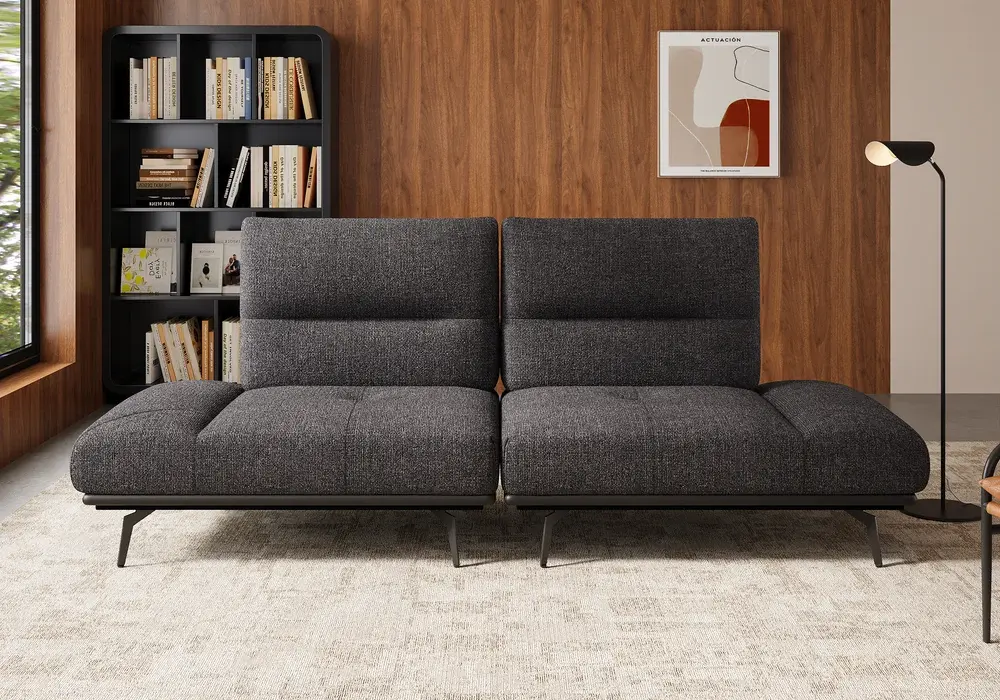
If the two pieces separate, address the supplied connection system before adding pads. Do not join modules with improvised straps around the upholstery or through the moving frame. Confirm whether a proposed cup or pad fits the actual leg contact point without lifting an adjacent support off the floor.
A Power Sofa With Wood Legs
The Curva 85 Inch Genuine Leather Power Reclining Sofa has power reclining seats and walnut-finished oak legs. For a model with visible furniture legs, compare an accessory with the foot’s true underside rather than its decorative outline.
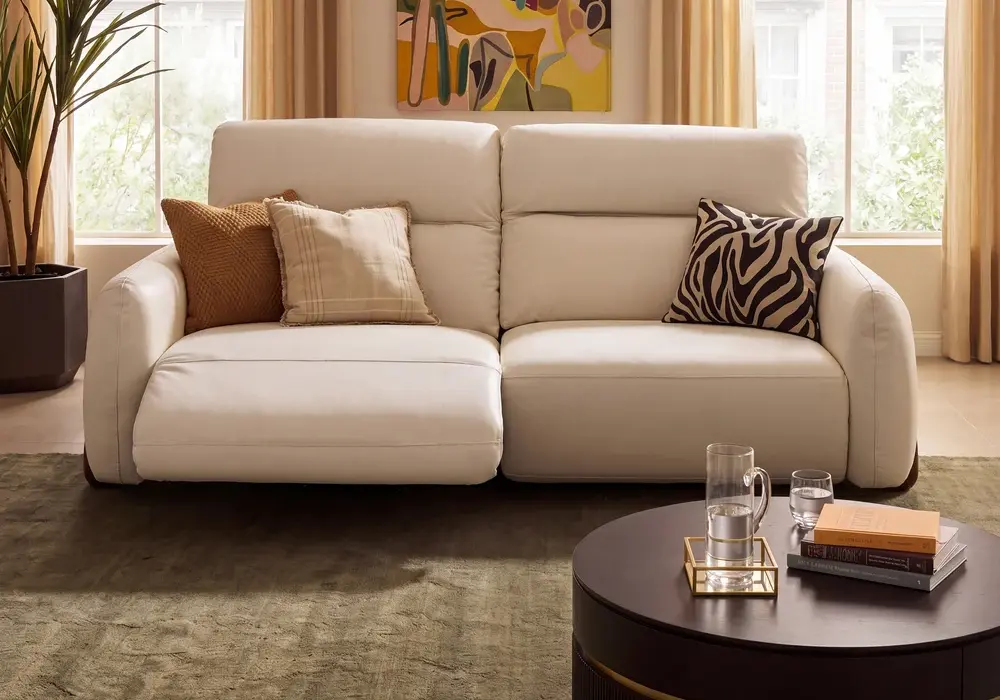
Check the sofa’s assembly guidance and ask which grip products are suitable. The listing’s power operation does not establish that every generic recliner accessory will fit, and the upholstery material tells you little about how the feet interact with the floor.
Avoid Fixes That Restrain the Wrong Part
Do not screw a recliner into the floor, attach it to a wall, or block it with a heavy object unless the manufacturer supplies and approves that installation. A restraint can transfer movement to a frame or mechanism that was not designed for it.
Avoid sprays, improvised glue, and adhesive carpet tape as quick fixes. Before putting any product between the sofa and floor, obtain approval for the support material and finish. Do not remove original feet or cut protective caps merely to expose a surface that seems grippier.
If you still have moving sliders beneath the sofa from delivery or rearranging, consult the assembly instructions about their removal. Do not confuse those temporary aids with original components that should stay fitted.
Know When to Request Service
Contact the retailer or manufacturer if the problem persists after approved setup checks, or if you find a bent support, cracked leg, loose connector, unusual noise, or a mechanism that moves unevenly. Supply the model information, a description of when the movement happens, and clear photos taken from a safe position.
Ask whether the issue is a support problem, an assembly problem, or an approved accessory question. That gives the service team a more useful starting point than simply asking for stronger pads.
After any approved correction, clear the surrounding area and check the sofa during normal use according to the manual. Stop if it remains unstable. The goal is a properly supported sofa that operates freely, with an accessory added only where it addresses an actual grip issue.
Before ordering pads, identify the sofa’s supports and your flooring type, then confirm compatibility with both manufacturers.
Frequently Asked Questions
Will rubber pads stop a recliner sofa from sliding?
A suitable non-slip pad may help when a correctly assembled sofa slides on a compatible floor. It is not a universal fix. Check the pad’s load suitability, shape, floor compatibility, and approval for the sofa before installation.
Are felt pads good for keeping a sofa in place?
Felt is commonly used for scratch protection, but it should not be assumed to provide grip. If sliding is the problem, ask for an approved non-slip solution while preserving whatever floor protection the manufacturer requires.
Why does only one part of my reclining sectional move?
It may be a connection or support issue rather than a whole-sofa friction problem. Inspect the assembly instructions for that configuration and verify the supplied connectors. Stop using the affected section if it rocks or appears loose.
Can I put a heavy object behind the sofa to stop movement?
Do not use a heavy object as a restraint. It can interfere with the reclining path and place unintended force on the frame. Maintain the specified clearance and address the base, connections, or grip instead.
Should a reclining sofa move at all when it operates?
Seat components move as part of normal operation, but persistent unintended travel across the floor needs checking. The correct behavior depends on the design. New noise, tipping, uneven movement, or rocking is a reason to stop and contact the manufacturer.