

Keep an outdoor sectional together by connecting compatible modules at the frame, increasing grip beneath the feet, and arranging the pieces so daily movement pushes them inward rather than apart. Before buying, check whether the set includes clips, brackets, straps, or a product-specific connector. Use only connectors that fit the frame and do not block drainage, folding parts, or adjustable positions.
Table of Contents
Find Out Why the Modules Are Moving
Different causes require different fixes. Lightweight modules may shift when someone sits on the edge. Smooth metal or plastic feet can slide on sealed concrete or tile. A rug can creep across the patio, carrying the entire sectional with it. Uneven pavers may let one module rock and slowly walk away from the group.
Watch the sectional during normal use before adding hardware. Ask someone to sit, stand, and move between the modules. Note whether the frames separate, only the cushions move, or the whole grouping slides. Check the following:
- Are all feet touching the floor evenly?
- Are the frames aligned at the same height?
- Did the product include connector pieces that were never installed?
- Are the clips oriented correctly and attached to structural rails rather than upholstery?
- Is the patio surface dusty, wet, sloped, or unusually smooth?
- Does the layout encourage people to push outward when they stand?
Fix stability or surface problems first. A connector should hold aligned modules together; it should not pull a twisted frame across an uneven surface.
Use the Connector Designed for the Set
Manufacturer-supplied clips or brackets are usually the cleanest solution because they are shaped for the frame spacing and load points. Follow the assembly guide and confirm the orientation before forcing a clip into place. Some connectors slide over adjacent rails from above. Others attach below the seats or rotate into a locked position.
Do not attach a connector to wicker strands, fabric loops, cushions, decorative wood slats, gas lines, or moving components. These parts may tear or become unsafe under load. If a connector is missing, contact the seller or manufacturer for the correct replacement. A generic clip can work only when its dimensions, material, and installation method are appropriate for both frames.
Connect the structural frames before adding cushions. Sit on each module, including the joints, and check for rocking or sharp movement. Then lift and move the group according to the instructions rather than dragging connected modules across the patio. Dragging can bend connectors or put leverage on the legs.
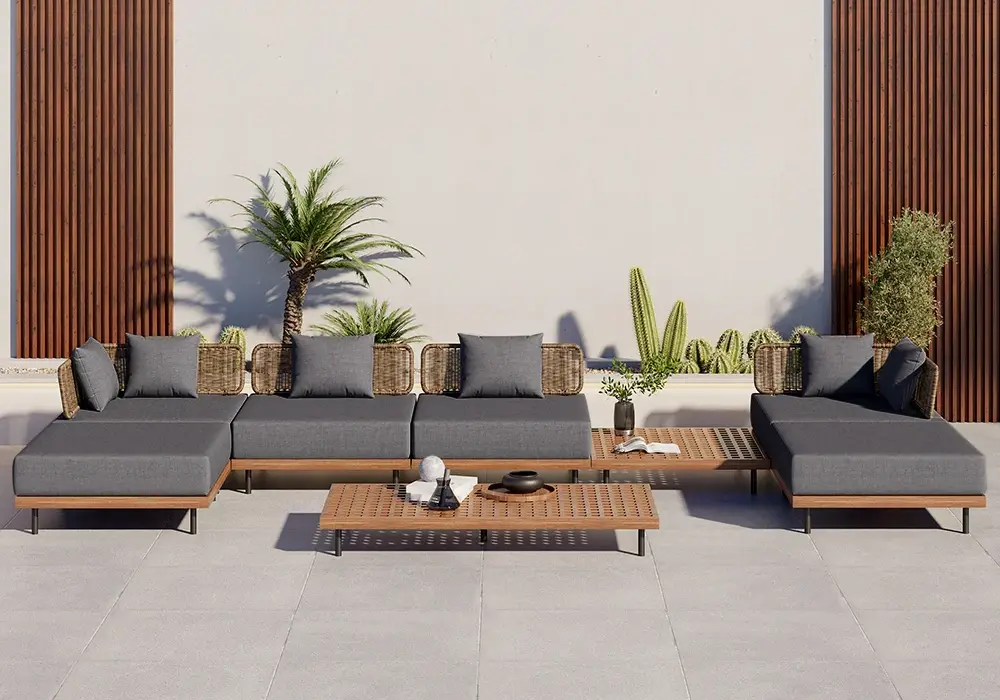
The number of modules in your set changes how much connecting you have to do. A large set such as the 8-piece L-shaped sectional with coffee table has enough modules for a long L, opposing lounge zones, or smaller conversation groups, but every extra module adds a joint to inspect. Decide which arrangement is your everyday layout and connect that group first. Keep a frequently moved ottoman or armless unit separate only if it remains stable and the product instructions allow independent use.
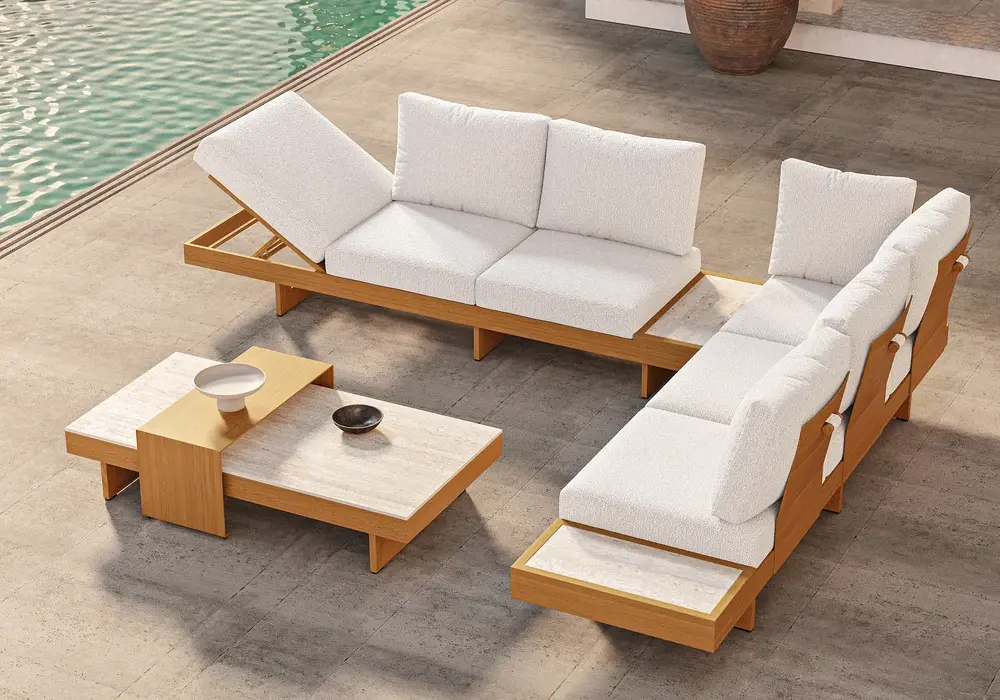
A set with fewer, larger sections, such as the Tevara 4-piece teak and aluminum modular set, simplifies the connection points, but side surfaces and angled backs still need careful alignment. Use the intended connectors and lift each section during rearrangement to protect the finished frame.
Add Grip Under the Feet
If the frames stay aligned but the entire set slides, increase friction at the floor. Outdoor-rated rubber furniture cups or non-slip pads can help on tile, composite decking, or sealed concrete. Select a size that fully supports the foot and a material suitable for outdoor exposure. Test for staining or finish transfer in a hidden area.
Clean both the floor and the furniture feet before installation. Fine dust can act like ball bearings and defeat a non-slip pad. Replace worn, hardened, or cracked pads. Do not stack many soft pads to correct a large height difference; use a stable, weather-suitable leveling solution recommended for the furniture and surface.
An outdoor rug can also add friction and define the conversation zone. Choose a size large enough for all sectional feet to rest securely on it. If only the front feet sit on the rug, the rear feet may still migrate on a smooth surface. Use an outdoor rug pad that drains and is compatible with the patio finish, and allow the rug and floor to dry after rain.
Arrange the Layout to Resist Separation
An L-shaped sectional is naturally more stable when both runs meet squarely and the outside corner is not used as a shortcut. Place the open side toward the main arrival path. This lets people enter the seating group without stepping across a joint or pushing a corner module outward.
For family gatherings, keep the coffee table reachable so guests do not brace against the sofa to lean forward. In a face-to-face conversation layout, balance the seating on both sides rather than placing all movable modules in one long unsupported line. For sunbathing, detach only the lounger or ottoman designed to move independently and reconnect it after use.
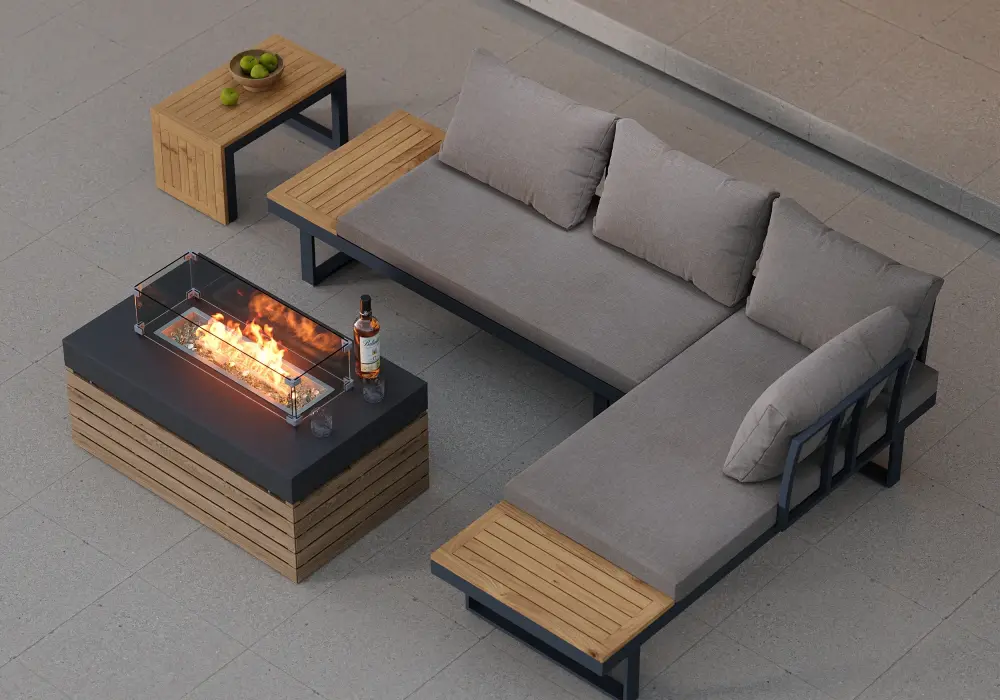
If your set includes a fire pit table, like the 4-piece modular sectional with fire pit, connection hardware must not interfere with the fuel hose, controls, ventilation, or the required clearance around the table. Keep a clear exit from the L-shaped group and follow the fire pit instructions whenever modules are moved.
If you want more arrangement ideas, use this patio layout and size guide to compare traffic patterns before locking the modules together. The goal is flexible outdoor living with defined positions, not a layout so rigid that every social occasion requires removing hardware.
Keep Cushions From Separating
Sometimes the frames remain together while the seat cushions slide. First check for built-in ties, hook-and-loop strips, pockets, or non-slip surfaces. Fasten them as instructed and make sure the cushion is oriented correctly. A cushion placed backward may miss the intended attachment point.
If the product has no retention system, use an outdoor-rated non-slip layer only when it will not trap water, stain the upholstery, or block ventilation. Do not pierce performance fabric or wrap a strap around a reclining or folding mechanism. Bring loose cushions inside during severe weather rather than relying on a connector to resist strong wind.
Back cushions are more likely to shift when people sit on the joint between modules. Re-center them after gatherings and check whether the frames have separated below. Treat repeated cushion movement as a diagnostic sign, not merely a styling problem.
Account for Wind and Severe Weather
Sectional clips are not storm anchors. Strong wind can lift cushions and move lightweight furniture even when the modules are connected. Follow local weather alerts and the manufacturer's storage guidance. Remove and store cushions, umbrellas, covers, and loose accessories before severe weather.
If the frames must remain outside, use an anchoring method specifically approved for the furniture, surface, and local conditions. Do not tie the sectional to gas equipment, railings not designed for the load, trees, or temporary objects. Avoid a cover that can collect air like a sail. A fitted, vented cover should be secured according to its instructions and checked for drainage.
After a storm, inspect the patio and frames before sitting. Look for shifted feet, bent connectors, loose fasteners, damaged glides, trapped debris, or water beneath the rug. Re-level and reconnect the set before normal use.
Build a Quick Reset Routine
A short routine keeps a modular layout working without turning the patio into a maintenance project. Once a week during active use, push each module gently toward its assigned tape mark, check the connector engagement, and straighten the rug. After a party, inspect the joints where guests sat or stood most often.
At the beginning and end of the season, clean the feet and floor, replace worn pads, and confirm that every connector still fits without force. Store spare clips and the assembly guide in a labeled bag. If the layout changes seasonally, photograph the underside connections so the set can be rebuilt correctly.
The most reliable solution usually combines three layers: level frames, correct connectors, and a high-friction floor contact. When those basics are right, the sectional can still adapt from an L-shaped lounge to facing conversation groups or sunbathing positions without drifting during everyday use.
Frequently Asked Questions
Do outdoor sectional clips fit every sofa?
No. Clip width, frame shape, rail spacing, and installation direction vary. Use the connector supplied for the set or a replacement confirmed by the seller or manufacturer. A clip that is too tight can damage the finish or frame, while a loose clip may release during use.
Can I use zip ties to hold outdoor furniture together?
Zip ties are not a universal furniture connector. They can abrade finishes, become brittle outdoors, create sharp edges, or tighten around the wrong part of the frame. Use the product's intended hardware or a verified outdoor furniture connector instead of treating a temporary tie as a structural fix.
How do I stop an outdoor sectional from sliding on concrete?
Clean the concrete and furniture feet, then use outdoor-rated non-slip cups or pads that fit the feet and do not stain the surface. A draining outdoor rug and compatible rug pad can add grip across the whole group. Recheck the position after rain and normal use.
Should all sectional modules be connected permanently?
Not necessarily. Connect the modules that form the stable everyday arrangement. Leave a module independent only when it is designed for standalone use and remains stable. A flexible setup can still have defined connection points for family gatherings, conversation, lounging, and sunbathing.
Will a furniture cover keep sectional pieces together in wind?
A cover is not an anchoring system and can catch wind if it is loose. Store cushions and loose accessories before severe weather, use a fitted and vented cover as instructed, and follow the manufacturer's guidance for securing or storing the frames. Inspect all connections after a storm.