

A kitchen island is one of the most versatile surfaces in the home. It can be a prep station in the morning, a casual dining spot at lunch, a storage hub during the week, and the centerpiece of a dinner party at night. That versatility also creates one common decorating question: what to put on a kitchen island without making it look cluttered or leaving too little room to work?
The answer depends on how you use the space. Some items can stay on the island permanently because they add style or support everyday routines. Others belong inside or underneath the island to keep the countertop clear. Then there are entertaining essentials that only need to come out when guests arrive.
Whether you have a compact 4-foot island or a spacious 8-foot family hub, the same principle applies: combine visual interest with practical function while protecting enough open space for food preparation and daily activity.
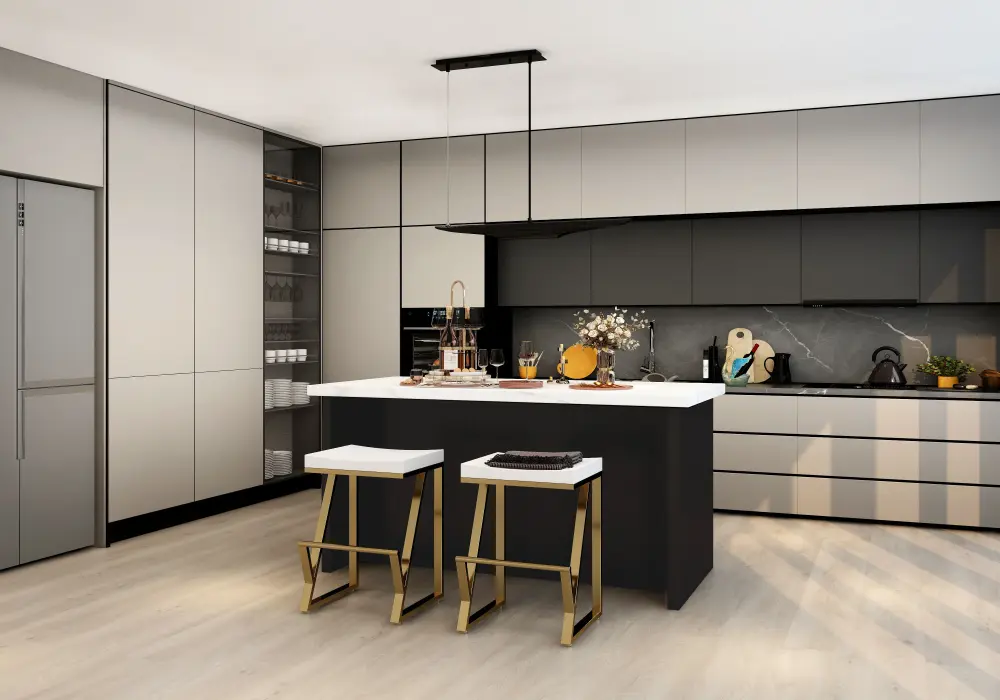
Modern 72" Wood Kitchen Island
Table of Contents
What to Put on a Kitchen Island for Everyday Decor and Entertaining
A well-styled kitchen island should look attractive without becoming a collection of objects you constantly have to move. The most practical approach is to create a simple everyday centerpiece, then switch to a more functional setup when entertaining. This keeps the island visually appealing while allowing it to adapt to different activities.
Kitchen Island Decor Ideas for Small, Medium, and Large Islands
The size of your island should determine how much decor you put on it. A small island benefits from restraint, while a larger surface can accommodate several visual zones.
Island Size | Ideal Everyday Setup | Styling Approach |
Around 4 ft | One statement piece or a tight 3-item cluster | Keep decor compact and protect prep space |
Around 6 ft | A simple 3-zone layout | Balance decor, function, and open workspace |
8 ft+ | Full centerpiece + book stack + accent piece | Create layers without crowding the surface |
For a small kitchen island, one statement piece is often enough. A sculptural bowl, compact vase, or small plant can add personality without consuming valuable workspace. A tightly grouped trio can also work well, such as a small tray, ceramic vase, and low decorative object.
A medium-sized island of around 6 feet gives you more flexibility. Try positioning a centerpiece slightly off-center, leaving a clear prep area on one side, and adding a small accent to the other side. This creates visual balance without making the island feel overly symmetrical or busy.
For an 8-foot or larger island, you can build a more layered arrangement. A substantial centerpiece can anchor the middle, while a stack of cookbooks and a smaller accent create secondary points of interest. Varying height adds dimension, but avoid tall objects that interfere with sightlines.
Kitchen Island Centerpiece Ideas by Decorating Style
Your overall kitchen style can help determine which decorative objects feel natural on the island.
For a modern or minimalist kitchen, try a single sculptural bowl, a streamlined vase, or one compact plant. A smaller number of carefully chosen pieces usually creates a stronger visual effect than numerous accessories.
For a farmhouse kitchen, a wooden tray can act as a permanent base for a ceramic pitcher and dried florals. The tray also makes the entire arrangement easy to move when the island becomes a prep surface.
For an industrial-style kitchen, metal canisters, dark-toned containers, and an exposed-bulb lamp can complement the materials of the room while keeping the island practical.
What Not to Put on a Kitchen Island
Not every attractive accessory belongs on the island permanently. Avoid very tall arrangements that block conversations or views across the kitchen. Fragile decorative pieces are also better kept away from high-traffic prep areas.
Most importantly, do not allow decorative objects to gradually take over the workspace. A kitchen island should remain useful for preparing food, serving meals, working, or gathering with family. When decor makes everyday tasks harder, it is no longer serving the space.
How to Style a Kitchen Island for Entertaining
Entertaining calls for a temporary setup that prioritizes accessibility and serving space. Instead of adding more permanent decor, temporarily replace everyday items with pieces that help guests help themselves.
Serving trays, tiered risers, drink dispensers, appetizer bowls, napkin holders, and phone charging stations can all turn the island into a functional hosting area.
A simple everyday-to-entertaining transition can include three steps:
Clear away: decorative objects, unnecessary appliances, cookbooks, and everyday prep tools.
Add: serving trays, drinks, glasses, snacks, napkins, utensils, and a charging station.
Keep: one low centerpiece or a single decorative accent for a finished appearance.
Keeping entertaining accessories together in one cabinet or drawer makes it possible to transform the island in just a few minutes. A plug-in charging tray can also provide a convenient charging point without requiring a full rewiring project.
What Everyday Essentials Should Stay on a Kitchen Island Countertop?
Unlike decorative accessories, everyday essentials earn their place because you use them frequently. The best countertop items support regular cooking, breakfast, cleanup, or meal preparation while still keeping the surface visually organized.
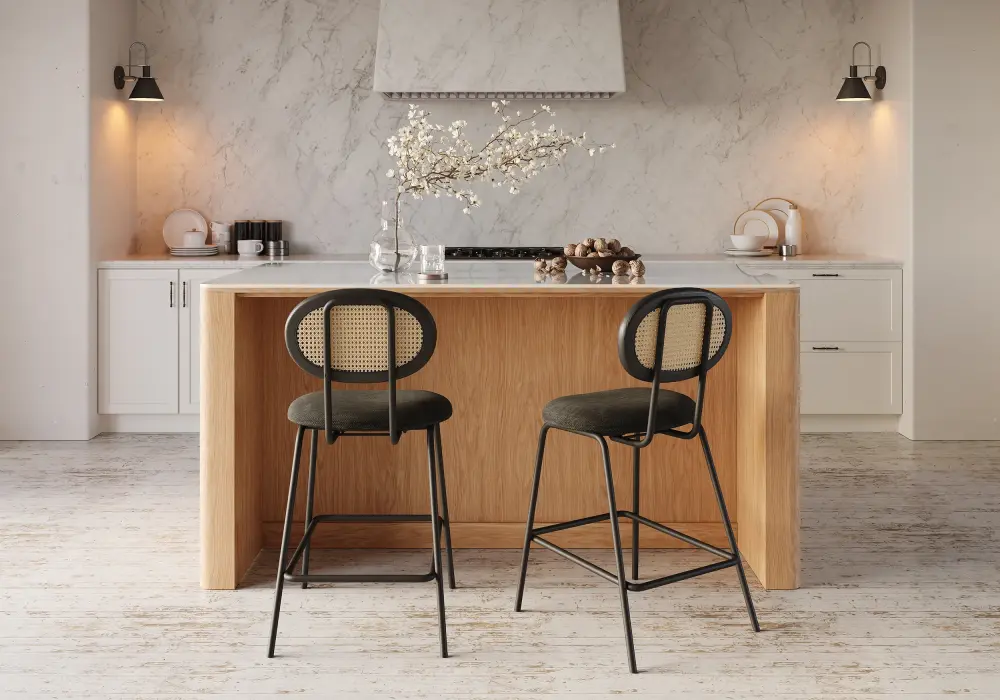
Modern 72" Glossy Sintered Stone Top Kitchen Island
Everyday Kitchen Island Essentials That Are Actually Useful
A practical always-on trio is a fruit bowl, cutting board, and utensil crock. These items are easy to access, useful throughout the day, and can be arranged so they look intentional rather than random.
A fruit bowl keeps fresh produce visible and within easy reach. A cutting board can support daily prep and double as a serving surface. A utensil crock keeps wooden spoons, spatulas, tongs, and other frequently used tools close to the main work zone.
Small Appliances to Keep on a Kitchen Island
The right small appliances depend on your cooking habits and the amount of available counter space.
A coffee maker or coffee station makes sense when the island is the main breakfast or morning gathering area. A stand mixer can stay out in a kitchen where baking is frequent enough to justify the space it occupies. A knife block can also be convenient near the primary prep zone, provided it is positioned safely and does not interfere with movement.
Less frequently used appliances are usually better stored elsewhere. Keeping every appliance on the countertop can make the island look crowded and reduce the flexibility of the surface.
How to Keep a Kitchen Island Countertop Clutter-Free
The simplest rule is to protect at least one clear prep zone. Everyday items should support kitchen tasks rather than compete with them.
Try grouping similar items together instead of spreading them across the entire island. A tray can visually contain a coffee station, while a utensil crock and cutting board can stay close to the prep area.
Task lighting should also illuminate the work surface without creating glare or interfering with food preparation. The ideal placement depends on the kitchen layout, ceiling height, and overall lighting plan.
Kitchen Island Storage Ideas for Drawers, Cabinets, and Pull-Outs
A kitchen island can provide far more than countertop space. The storage inside and underneath it can be organized around the way you actually use the kitchen, making frequently used items easier to reach while keeping less attractive necessities out of sight.
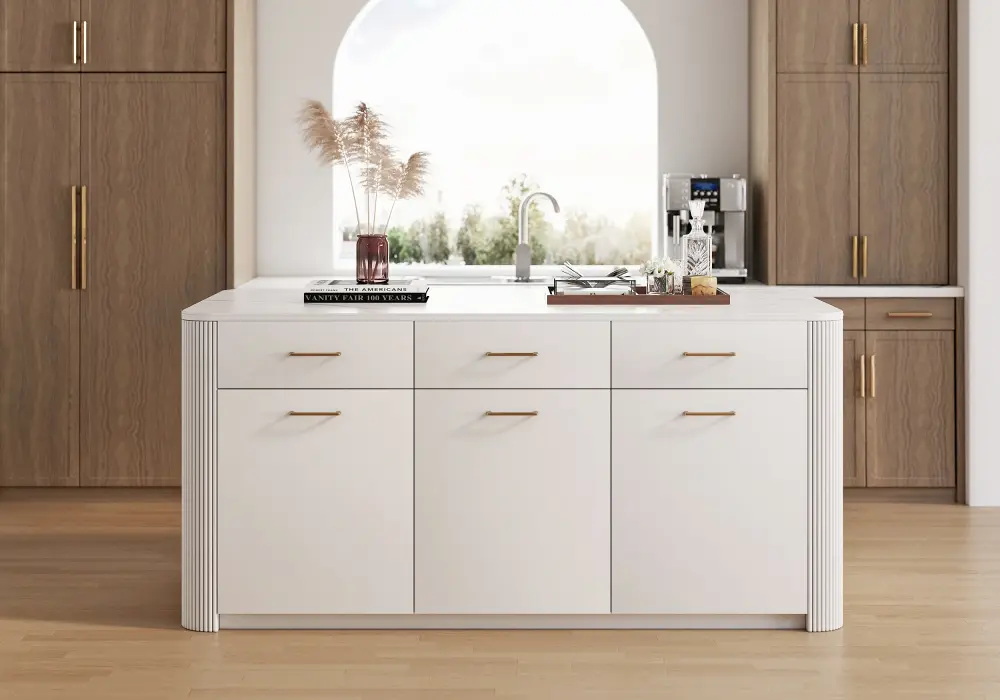
Glossy Sintered Stone Kitchen Island
Best Under-Island Storage Ideas for Everyday Kitchen Items
Start by organizing storage according to frequency of use. Everyday tools should occupy the easiest-to-access drawers, while larger or less frequently used equipment can go deeper inside the island.
Drawer dividers are useful for utensils, measuring tools, kitchen gadgets, and small accessories. They prevent drawers from becoming catch-all spaces.
Pull-out trash and recycling bins keep bulky containers hidden while making cleanup easier. Placing them near the prep area can reduce unnecessary movement when cooking.
Deep pot drawers are ideal for cookware, mixing bowls, and other heavy kitchen equipment. Compared with deep fixed cabinets, drawers generally make it easier to see and reach stored items.
Tray dividers are especially useful for baking sheets, cutting boards, serving platters, and other flat pieces. Vertical organization helps prevent the need to remove several items before reaching the one you need.
Countertop Storage Solutions for a Kitchen Island
Not every storage solution has to involve new cabinetry. Tiered stands can create additional vertical storage for frequently used ingredients or serving pieces. Utensil caddies can keep cooking tools organized, while open-shelf baskets can make everyday supplies easy to access without spreading them across the countertop.
The key is to use these accessories selectively. Too many open organizers can make an island feel visually busy, so choose storage that solves a specific problem.
How Much Storage Can a Kitchen Island Hold?
Island length has a major effect on storage capacity. A shorter island needs to prioritize the most important functions, while a longer island can accommodate several dedicated storage zones.
Island Length | Practical Storage Ideas |
Around 4 ft | Deep drawers, compact utensil storage, one trash/recycling pull-out |
Around 6 ft | Multiple drawer zones, cookware storage, tray dividers, waste pull-outs |
8 ft+ | Full drawer system, dedicated waste center, pantry-style pull-out column |
A 4-foot island may need to focus on one or two high-priority storage functions. On a 6-foot island, it becomes easier to divide storage by category, such as cookware, food prep, and waste. An 8-foot island can potentially support a more comprehensive organization system, including a pantry-style pull-out column, depending on the cabinetry design.
Kitchen Island Storage Ideas for Different Budgets
An entry-level organization setup can include adjustable drawer dividers, basic caddies, shelf baskets, and simple organizers. Individual upgrades may cost roughly $20–$100 per solution, depending on material, size, and construction.
A mid-range setup may include upgraded pull-out waste bins, custom-fit drawer inserts, or more durable cabinet organizers. Individual storage upgrades can commonly fall in the $100–$500 range.
A premium setup may involve custom cabinetry, integrated waste sorting, specialized drawer inserts, and tall pull-out pantry storage. Depending on the design and installation requirements, larger storage upgrades can range from $500 to $2,000+.
These figures are broad planning estimates rather than fixed prices. Actual costs can vary by materials, layout, cabinetry, and installation.
Kitchen Island Protective Accessories and Safety Essentials
A practical kitchen island needs more than decor and storage. Simple protective accessories can help preserve the countertop, reduce movement from small appliances, and make the space safer for everyday use.
Placemats, Trivets, and Heat Protection
Placemats are useful when the island doubles as a dining or homework surface. Trivets provide a barrier between the countertop and hot cookware, serving dishes, or appliances.
Even durable surfaces can benefit from using a protective layer when placing very hot items on the island.
Non-Slip Pads for Small Kitchen Appliances
Non-slip pads can help prevent small appliances from shifting or vibrating during use. They can also reduce the chance of scratches beneath coffee makers, mixers, and other countertop equipment.
Choose pads that fit the appliance footprint and do not create an unstable surface.
Childproofing Kitchen Island Corners and Storage
Busy kitchens can benefit from corner guards or other childproofing measures. Fragile decor should be removed from low shelves and easily accessible surfaces, while heavy objects should be stored securely to reduce the risk of accidental movement.
Electrical Safety for Kitchen Island Lighting and Charging
An island may benefit from outlets, lighting, or built-in charging features, but any permanent electrical additions should follow the regulations and safety requirements that apply in your location.
Good planning also means considering cord placement and routing. Charging cables and appliance cords should not cross food-preparation areas or create trip and snag hazards.
How to Choose What to Put on a Kitchen Island
Choosing what belongs on a kitchen island becomes much easier when every item has a clear purpose. Instead of filling the countertop first and finding storage later, work from your daily routines: identify what you use constantly, what you want to display, and what should only appear when guests arrive.
For everyday use, prioritize a few attractive pieces and frequently used essentials. Use drawers, pull-outs, and dividers to keep less attractive necessities organized. When entertaining, clear the surface and replace everyday clutter with serving and hosting tools.
The goal is not to fill every inch of the island. It is to create a surface that looks finished when the kitchen is quiet and works effortlessly when life gets busy.
FAQ: Common Questions About What to Put on a Kitchen Island
What are simple centerpiece ideas for a small kitchen island without blocking workspace?
Choose one low-profile statement piece, such as a sculptural bowl, compact plant, or small vase. A three-item arrangement can also work when kept tightly grouped and away from the main prep zone.
What's the easiest way to switch an island from everyday use to an entertaining setup?
Clear everyday decor and appliances that are not needed, then add serving trays, drinks, glasses, snacks, and a phone charging station. Keeping entertaining items together makes the transition faster.
What small appliances and everyday items actually belong on a kitchen island countertop?
Frequently used items such as a coffee maker, stand mixer, knife block, fruit bowl, cutting board, and utensil crock are practical choices. Appliances used only occasionally are usually better stored elsewhere.
What's the best way to organize under-counter storage, including trash and recycling pull-outs?
Group storage by frequency of use. Keep everyday utensils and cookware in easy-access drawers, use deep drawers for pots, tray dividers for flat items, and pull-out bins near the prep area for convenient cleanup.
How can I add charging or lighting to an island without a full rewiring project?
A plug-in charging tray can provide a convenient charging station without major electrical changes. For lighting, portable or plug-in fixtures may offer flexibility, while permanent electrical work should follow local regulations and safety requirements.