

A weather-resistant outdoor sectional should do more than survive an occasional shower. It needs to handle sunlight, humidity, temperature changes, wind, dirt, and repeated use without quickly fading, rusting, cracking, or developing mold. The key is to look beyond labels such as “all-weather” or “weatherproof” and examine the actual frame, fabric, cushion filling, construction, and maintenance requirements. This guide explains the materials and design details that matter most, so you can choose an outdoor sectional that fits your space and remains comfortable and attractive through changing seasons.
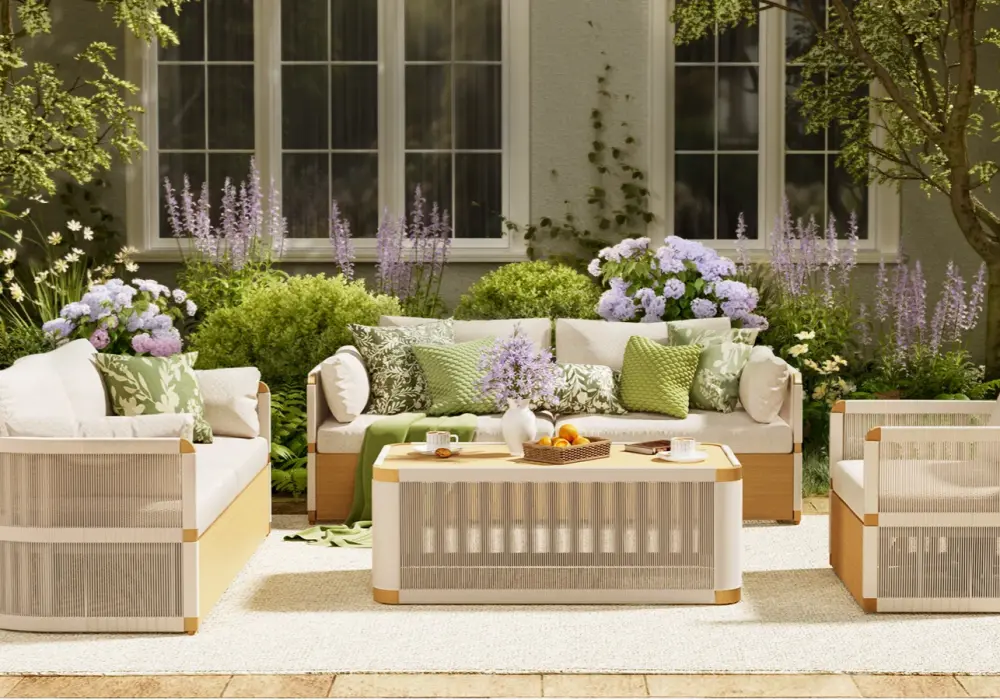
Source Homary
Choose a Frame Material That Matches Your Outdoor Climate
The frame is the structural foundation of an outdoor sectional, so its material has a major impact on durability. Aluminum, HDPE wicker, teak, and powder-coated steel can all work well outdoors, but they behave differently when exposed to moisture, UV radiation, salt, and temperature changes.
Powder-Coated Aluminum: Lightweight and Rust Resistant
Powder-coated aluminum is one of the most practical choices for a weather-resistant outdoor sectional. Aluminum naturally resists rust because it does not contain iron, while a quality powder coating adds another protective layer against moisture and everyday wear.
Its low weight is useful when furniture needs to be moved or rearranged. However, lightweight construction can also be a disadvantage in areas exposed to strong winds. Look for reinforced frames, sturdy feet, and secure modular connectors rather than assuming every aluminum sectional will remain stationary.
For humid patios or areas with frequent rain, aluminum is particularly convenient because it does not require the same rust-prevention routine as steel.
HDPE Wicker Offers a Practical Alternative to Natural Wicker
HDPE, or high-density polyethylene, is commonly used to create synthetic wicker with an outdoor-friendly structure. Unlike natural wicker, quality HDPE wicker does not readily absorb water and can provide good resistance to moisture and UV exposure.
It is especially useful when you want the woven appearance of wicker without the maintenance demands of natural plant fibers. Check whether the wicker is specifically designed for outdoor use and whether UV stabilization is included. Lower-quality synthetic materials can become brittle, fade, or crack after prolonged exposure.
Teak Is Naturally Durable, but It Still Needs Care
Teak contains natural oils that help it resist moisture and outdoor deterioration, making it a classic material for patio furniture. Its dense grain also gives it excellent structural durability.
However, “naturally weather resistant” does not mean “maintenance free.” Untreated teak will gradually develop a silver-gray appearance as it weathers. If you want to maintain its original golden-brown color, regular cleaning and an appropriate teak-care routine may be necessary.
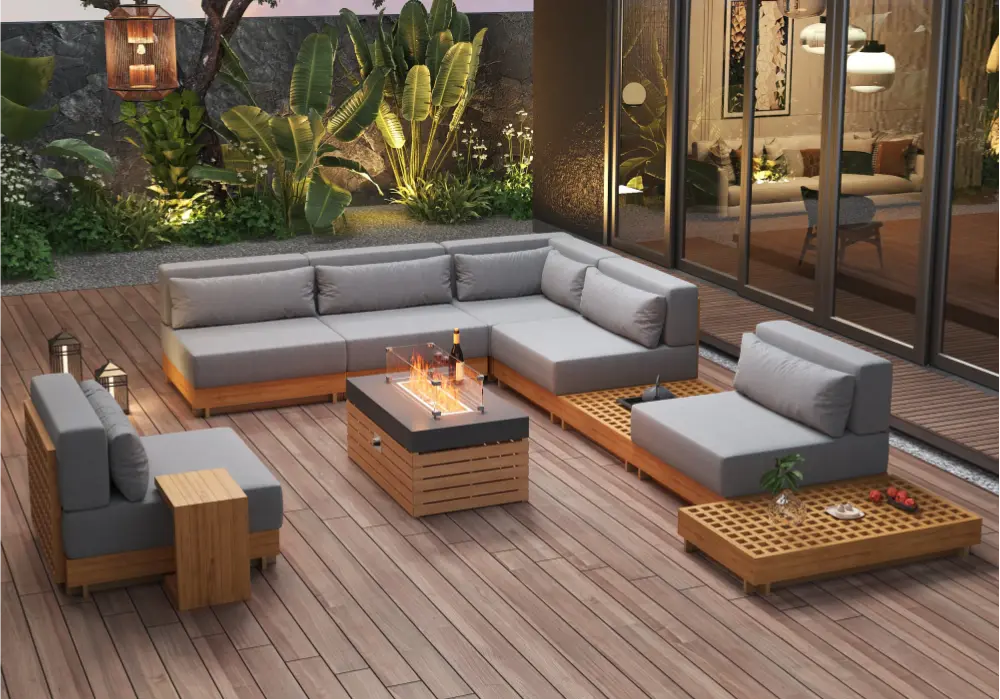
For example, the Grida 10-Pieces Premium Teak Modular L-Shaped Outdoor Sofa Set with Fire Pit combines a teak modular sectional with a propane fire pit. Its teak construction illustrates why natural wood can be an attractive choice when weather resistance and outdoor aesthetics are equally important. Homary describes the teak frame as naturally resistant to decay and outdoor elements.
Source Homary
Powder-Coated Steel Is Strong but More Dependent on Coating Quality
Steel provides excellent structural strength and can be a good choice for large sectional frames. Its main weakness is corrosion. Once moisture reaches exposed or damaged steel, rust can develop.
A durable powder coating, properly treated joints, drainage points, and protected hardware are therefore important. Inspect corners, welds, screw holes, and areas where the coating may be scratched.
Frame material | Main advantage | Main concern | Maintenance level |
Powder-coated aluminum | Rust resistant and lightweight | May need extra wind stability | Low |
HDPE wicker | Moisture resistant and versatile | Quality varies by UV stabilization | Low to moderate |
Teak | Naturally durable and attractive | Needs care if you want its original color | Moderate |
Powder-coated steel | Strong and stable | Vulnerable to rust if coating fails | Moderate |
For salt-air environments, aluminum and properly formulated HDPE are often easier to maintain than steel. For wet backyards, all four can work when properly constructed, but drainage and surface protection matter as much as the basic material.
Look for UV-Resistant Fabrics and Cushions That Dry Quickly
A weather-resistant sectional can have a durable frame and still fail outdoors if its cushions are poorly designed. Fabric needs to resist fading and moisture, while the filling should release water instead of trapping it for days.
Solution-Dyed Acrylic Helps Preserve Color
Solution-dyed acrylic is widely regarded as a strong choice for outdoor upholstery because the color is incorporated into the fiber during manufacturing rather than simply applied to the surface.
This can provide better resistance to UV fading than many ordinary indoor fabrics. It does not make the fabric completely immune to fading, however. Continuous sunlight, high temperatures, dirt, and chemical exposure can still affect appearance over time.
When comparing fabrics, ask about UV resistance, outdoor performance ratings, cleaning instructions, and whether the entire fabric is intended for continuous outdoor exposure.
Olefin and Polypropylene Fabrics
Olefin, also known as polypropylene, is another useful outdoor upholstery option. It is lightweight, relatively moisture resistant, and can provide good color retention when specifically manufactured for outdoor applications.
The important distinction is between an outdoor-grade fabric and a generic synthetic fabric. Do not judge durability solely by the fiber name. Construction, UV stabilization, weave density, coating, and manufacturing quality all influence performance.
Quick-Dry Cushion Fillings Reduce Moisture Problems
Water-resistant fabric does not automatically mean a cushion is waterproof. Rain can enter through seams, zippers, stitching, or the underside of the cushion.
Quick-dry foam and other open-cell outdoor cushion fillings are designed to allow water to drain and air to circulate more effectively than conventional indoor foam. This reduces the amount of time cushions remain wet after rain.
A simple splash test can also provide useful information when evaluating a fabric. Sprinkle or pour a small amount of water onto the surface and observe whether it beads up, spreads quickly, or penetrates immediately. This is only a basic indication, not a laboratory test, but it can help compare samples.
After heavy rain, stand cushions on their sides when possible and allow air to circulate around them. Never store damp cushions inside an enclosed container.
For cleaning, follow the manufacturer's instructions. Avoid automatically reaching for bleach, harsh solvents, or aggressive chemicals, as these can damage dyes, protective finishes, stitching, or nearby frame materials.
Build a Simple Maintenance Routine for Year-Round Outdoor Use
Even the best weather-resistant outdoor sectional benefits from regular care. A simple maintenance schedule can prevent small problems from becoming expensive repairs.
Spring: Clean Before the Outdoor Season
At the beginning of the season:
- Remove loose leaves, dust, and debris.
- Vacuum or brush cushions according to the fabric instructions.
- Wash frames with mild soap and clean water.
- Check for scratches, loose screws, damaged connectors, and rust spots.
- Inspect cushion seams and zippers.
- Confirm that drainage openings are not blocked.
For powder-coated metal, avoid abrasive pads that can scratch the protective surface. For teak, use products specifically intended for teak rather than aggressive household cleaners.
Summer: Deal With Rain Quickly
After a major storm, remove standing water from frames and surfaces. Place wet cushions where they can dry with plenty of airflow.
Do not put damp cushions under a tightly fitted cover. A cover that prevents airflow can trap humidity and create conditions favorable to mildew.
If food, sunscreen, drinks, or dirt spill onto the fabric, clean them promptly. Stains that remain in direct sunlight can become harder to remove.
Fall and Winter: Cover, Store, or Winterize
If your outdoor sectional will remain outside during colder months, use a breathable, properly fitted furniture cover. The cover should protect against rain and debris while allowing some airflow.
If cushions can be removed, storing them in a clean, dry, ventilated indoor area is generally preferable to leaving them exposed through an entire wet or freezing season.
Before covering the sectional, make sure every component is dry. Check the cover periodically after storms to ensure water is not pooling on top.
For areas with freezing temperatures, follow the manufacturer's winter-storage instructions. Some materials tolerate freezing conditions well, while certain finishes, cushions, or connectors may require additional protection.
Avoid: chlorine bleach unless the manufacturer specifically permits it, strong acids, abrasive cleaners, pressure washing at close range, and storing wet cushions in sealed containers.
Measure Your Patio and Plan for Wind Before Choosing a Modular Layout
An outdoor sectional can look compact in a showroom but occupy considerably more space once cushions, side tables, walkways, and doors are taken into account.
Start With the Available Floor Area
Measure the usable space rather than the total patio or deck area. Mark doors, steps, railings, grills, pool edges, fire features, and other fixed obstacles.
Leave enough clearance for people to walk comfortably. Also consider how doors swing and whether furniture will interfere with access.
For an L-shaped sectional, measure both legs separately. For a modular sectional, record the dimensions of every individual module and confirm the assembled configurations offered by the manufacturer.
Compare Seat Depth, Height, and Overall Dimensions
Deep seats can be comfortable for lounging but may consume valuable floor space. A sectional with a high back can provide more support while visually occupying more space.
Before ordering, compare:
Measurement | Why it matters |
Overall width | Determines whether the sectional fits the available wall or deck edge |
Overall depth | Affects walking space and usable patio area |
Seat depth | Influences lounging comfort and posture |
Seat height | Affects ease of getting on and off |
Back height | Determines support and visual scale |
Module width | Helps with delivery and future reconfiguration |
Clearance | Keeps pathways and doors accessible |
Make Wind Stability Part of the Design
Wind is often overlooked when selecting outdoor sectionals. Lightweight aluminum modules, loose cushions, and tall furniture can be moved by strong gusts.
Look for secure module connectors that prevent individual pieces from drifting apart. Depending on the design, weighted bases, heavier frames, anti-slip feet, or anchoring solutions may improve stability.
For exposed patios, decks, and rooftop areas, consider the local wind conditions and follow the manufacturer's recommendations for anchoring or securing furniture. Always store loose cushions and accessories when severe weather is expected.
A modular design is valuable because pieces can be rearranged, but do not assume every modular sectional supports unlimited configurations. Some connectors, corner modules, and arm units are designed to work only in specific arrangements.
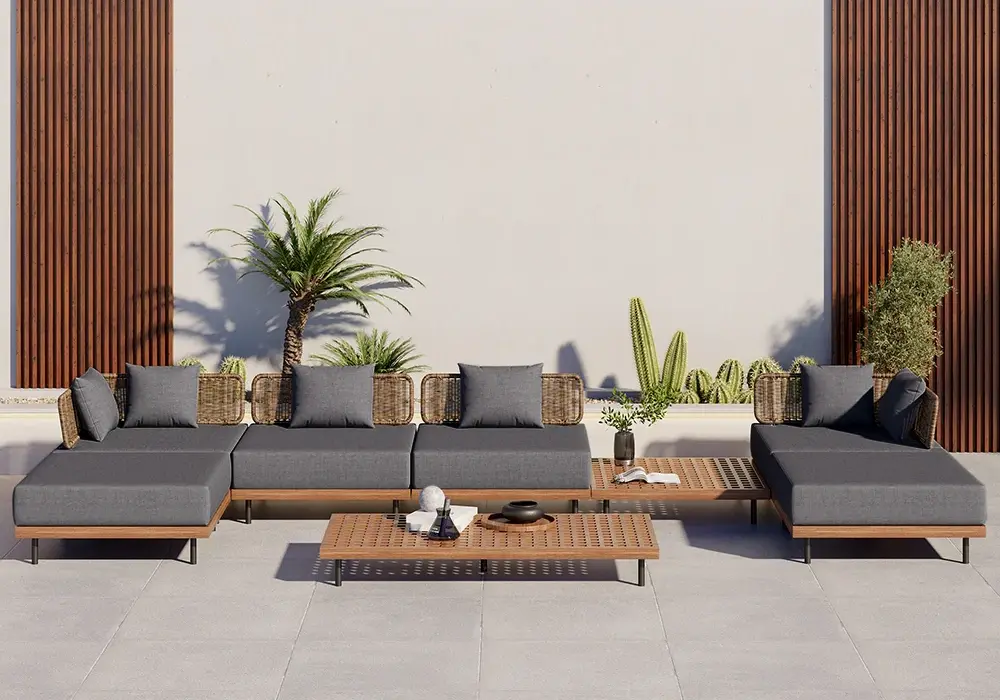
If flexibility is a priority, an aluminum-and-rattan configuration can be worth considering. Homary's 8-Piece Teak & Aluminum & Rattan Outdoor Sectional Sofa Set combines a rust-resistant aluminum frame, PE rattan backrests, teak elements, and modular seating pieces that can be rearranged for different patio or deck layouts.
Source Homary
Verify Weather-Resistance Claims Before You Buy
Words such as “all-weather,” “waterproof,” and “weatherproof” are useful marketing descriptions, but they are not enough to evaluate long-term performance.
Read the Warranty for the Details Behind the Claims
A good warranty should clearly explain what is covered and for how long. Pay particular attention to:
- Frame corrosion or structural failure
- Fabric fading or degradation
- Cushion defects
- Wicker cracking or deterioration
- Hardware failure
- Coverage exclusions
- Required maintenance
- Commercial versus residential use
- Whether coastal or high-exposure environments have special exclusions
A warranty that covers the frame but excludes finish deterioration may provide less protection than you expect. Likewise, a fabric warranty may have specific conditions concerning cleaning products, direct sunlight, or normal fading.
Think About Your Actual Exposure
The same sectional may experience very different levels of stress depending on where it is placed. Salt-laden air can accelerate corrosion on vulnerable metal components. Constant humidity can increase drying time. Strong sunlight can accelerate fabric fading and surface degradation.
This does not mean one material is universally best. Instead, match the construction to the conditions.
For example, a shaded and relatively dry patio may have very different requirements from an uncovered, sun-exposed area beside a pool. A rooftop installation may also need more attention to wind stability than a sheltered backyard.
Use Reviews to Look for Long-Term Evidence
Customer reviews are most useful when they describe actual use over time. Look for comments mentioning several seasons of exposure rather than reviews written immediately after delivery.
Useful signals include:
- “After two summers...”
- “Still stable after heavy rain...”
- “Color remained consistent...”
- “Rust appeared around the joints...”
- “Cushions dried overnight...”
- “Connectors loosened after repeated use...”
Photos from long-term owners can also reveal issues that product photography cannot show.
Consider Integrated Features Without Sacrificing Durability
Weather-resistant outdoor furniture can also be designed around how you actually use the space. For example, a sectional with an integrated fire pit can turn a seating area into a gathering space without requiring a separate table.
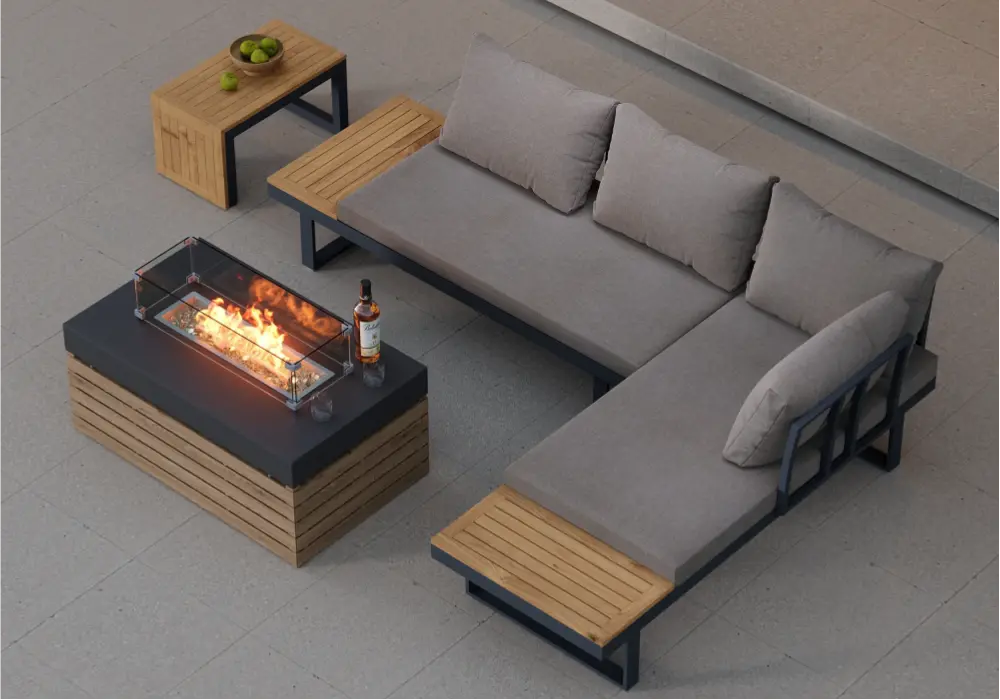
The Sectional Outdoor Sofa Set with Propane Gas Fire Pit Table and Glass Wind Guard is an example of this approach. Its combination of sectional seating and a propane fire-pit table with a glass wind guard is particularly relevant when evaluating multifunctional patio layouts. Homary also lists aluminum-and-teak outdoor sectional configurations with weather-oriented materials and modular layouts.
Source Homary
The important point is to evaluate the fire-pit component separately from the sectional itself. Check its construction, fuel requirements, safety certification where applicable, ventilation requirements, and clearance requirements rather than treating the entire set as one generic “weatherproof” product.
Choose Your Outdoor Sectional by Construction, Not Just Appearance
A weather-resistant outdoor sectional is a combination of materials, engineering, and maintenance rather than a single “weatherproof” feature. Start by matching the frame to your exposure conditions, then examine the fabric and cushion filling. After that, measure the space carefully and consider wind stability, modular connectors, and access routes.
Before purchasing, save a short list of the specifications that matter: frame material, UV-resistant fabric, quick-dry cushions, corrosion-resistant hardware, dimensions, stability features, cover requirements, and warranty coverage. If possible, request fabric samples so you can evaluate texture, color, and water behavior before committing to a full set.
The goal is not to find furniture that needs zero care. The better goal is to choose an outdoor sectional whose materials and construction make normal outdoor maintenance simple, predictable, and affordable.
FAQ
What is the most weather-resistant frame material for an outdoor sectional?
There is no single best material for every environment. Powder-coated aluminum is highly practical because it is lightweight and naturally resistant to rust. HDPE is also a strong option for moisture and UV exposure. Teak offers excellent natural outdoor durability but needs maintenance if you want to preserve its original color. Powder-coated steel provides strength but requires good corrosion protection.
Are outdoor sectional cushions truly waterproof or just water-resistant?
Most outdoor cushions are better described as water-resistant rather than completely waterproof. Water can enter through seams, zippers, stitching, and openings in the cushion construction. Quick-dry foam and breathable fillings help water escape faster, while outdoor fabrics can reduce surface absorption.
How do I keep outdoor sectional cushions from fading and getting moldy?
Choose UV-resistant outdoor fabrics such as solution-dyed acrylic or suitable outdoor-grade olefin. Clean spills promptly, keep cushions elevated or positioned for airflow after rain, and never store damp cushions in sealed containers. A breathable cover can also reduce exposure when the sectional is not being used.
Do I need to cover an all-weather outdoor sectional during winter?
An all-weather sectional can generally remain outdoors when designed for outdoor conditions, but a properly fitted, breathable cover can reduce exposure to rain, dirt, snow, and debris. Removable cushions are often better stored in a dry, ventilated location during prolonged wet or freezing weather.
Can a modular outdoor sectional be made stable in windy conditions?
Yes. Choose heavier construction where appropriate and look for secure module connectors, anti-slip feet, weighted bases, or manufacturer-approved anchoring systems. Loose cushions should be stored or secured during strong winds. Rooftop and highly exposed installations require particular attention to wind conditions.
How do I choose the right outdoor sectional dimensions for my patio or deck?
Measure the usable area first, including doors, stairs, railings, and walkways. Compare the sectional's total width and depth with the available space, then check seat depth, seat height, back height, and individual module dimensions. Leave sufficient clearance for comfortable movement and access.
What should a good weather-resistant outdoor sectional warranty cover?
Review whether the warranty covers structural frame defects, corrosion, fabric performance, cushion defects, hardware, and other material failures. Also check exclusions related to fading, coastal exposure, improper cleaning, commercial use, and normal wear. A clear warranty is much more useful than a broad “all-weather” claim without specific coverage details.