

Outdoor furniture faces more than occasional rain. Constant moisture, high humidity, and intense sunlight can cause metal frames to corrode, cushions to develop mildew, and wood to crack over time. Even furniture advertised as “weatherproof” may not hold up well if its materials and construction are not suited to your outdoor environment. Choosing the right water resistant patio furniture starts with understanding how different materials handle moisture and changing weather conditions.
Although waterproof and water-resistant are often used interchangeably, they do not mean the same thing. The frame, protective finish, cushion fabric, and filling all affect how well a patio set performs outdoors. Factors such as drainage, ventilation, and maintenance also play an important role in preventing moisture damage and extending furniture life.
In this guide, you’ll discover what water-resistant labels really mean, compare the best outdoor furniture materials for rain, humidity, and coastal conditions, and learn how to choose durable cushions and protect your investment. Whether you’re furnishing a covered balcony or an uncovered patio, these practical tips will help you find outdoor furniture that suits your space, climate, and maintenance preferences.
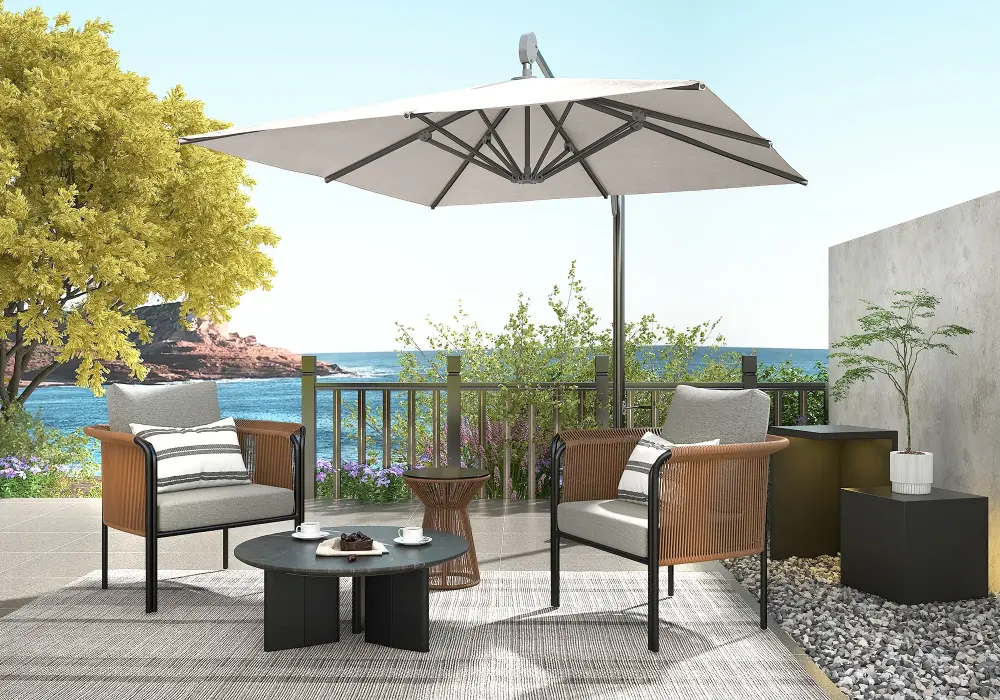
3 Pieces Coffee Rattan Outdoor Sofa Set
Table of Contents
Water-Resistant vs. Waterproof Patio Furniture: What the Labels Mean
Outdoor furniture descriptions often use terms such as “waterproof,” “water-resistant,” “water-repellent,” and “weather-resistant.” Although they sound similar, they do not promise the same level of protection. Understanding these labels helps you choose furniture that suits your climate and outdoor space.
Waterproof vs. Water-Resistant vs. Water-Repellent
Waterproof generally means that a product prevents water penetration under specified conditions. This term is more applicable to sealed surfaces, protective covers, and certain fabrics than to an entire furniture set containing frames, joints, cushions, and hardware.
Water-resistant furniture can tolerate some moisture without immediate damage. It may handle splashes and occasional rain, but prolonged exposure or standing water can still cause deterioration.
Water-repellent describes a surface or fabric treatment that encourages water to bead up and roll away. However, the treatment may wear off over time, and water can still enter through seams or penetrate cushion filling.
What Do Weather-Resistant and Outdoor-Rated Mean?
Weather-resistant is a broader term suggesting that a product is designed to withstand outdoor conditions, potentially including moisture, UV exposure, and temperature changes. Its actual performance depends on the materials, construction, and protective finishes.
Outdoor-rated indicates that a product is intended for outdoor use, but it does not automatically guarantee year-round performance in every climate. Some furniture is better suited to covered patios, while other pieces are designed for more exposed environments.
Before buying, check the manufacturer's specifications to understand the level of protection offered and any limitations on outdoor use.
What to Check Before Buying Water-Resistant Patio Furniture
Product labels provide a useful starting point, but several practical details can help you assess how well furniture will handle moisture:
- Outdoor-use rating: Does the manufacturer approve year-round outdoor exposure, or is the furniture intended for a covered patio?
- Protection requirements: Must you cover or store the furniture during prolonged rain, winter, or severe weather?
- Drainage design: Do the seats, tabletops, and cushions allow water to escape instead of collecting in corners?
- Protective treatments and warranty: Are rust resistance, UV protection, and mildew resistance specified? What does the warranty actually cover?
Inspect the entire product, not just the frame. Fabric treatments, cushion filling, screws, joints, and protective coatings all affect durability.
Your outdoor environment also determines how much protection you need. A covered balcony may work well with moderately water-resistant furniture. A fully exposed garden requires better drainage and more robust materials, while a coastal patio calls for additional corrosion protection.
Ultimately, labels only tell part of the story. Choosing the right materials for your climate is essential to keeping patio furniture looking good and performing well over time.
Best Water-Resistant Materials for Rain, Humidity and Salt Air
Choosing the best outdoor furniture materials starts with understanding how each option responds to moisture, sunlight, and everyday use. Some materials resist corrosion naturally, while others rely on protective coatings that require periodic maintenance.
Powder-Coated Aluminum
Aluminum is a popular choice for water-resistant patio furniture because it does not rust like ordinary iron or steel. A powder-coated finish adds another layer of protection and creates a clean, contemporary appearance.
Its lightweight construction makes aluminum easy to move, rearrange, or store before a storm. It is particularly suitable for exposed patios and balconies where frequent maintenance is inconvenient.
The main drawbacks are that aluminum can dent, and scratches in the finish may leave surfaces vulnerable to damage. Lightweight pieces may also need to be secured in windy locations.
Best for: Rainy climates, uncovered patios, balconies, and homeowners seeking low-maintenance outdoor furniture.
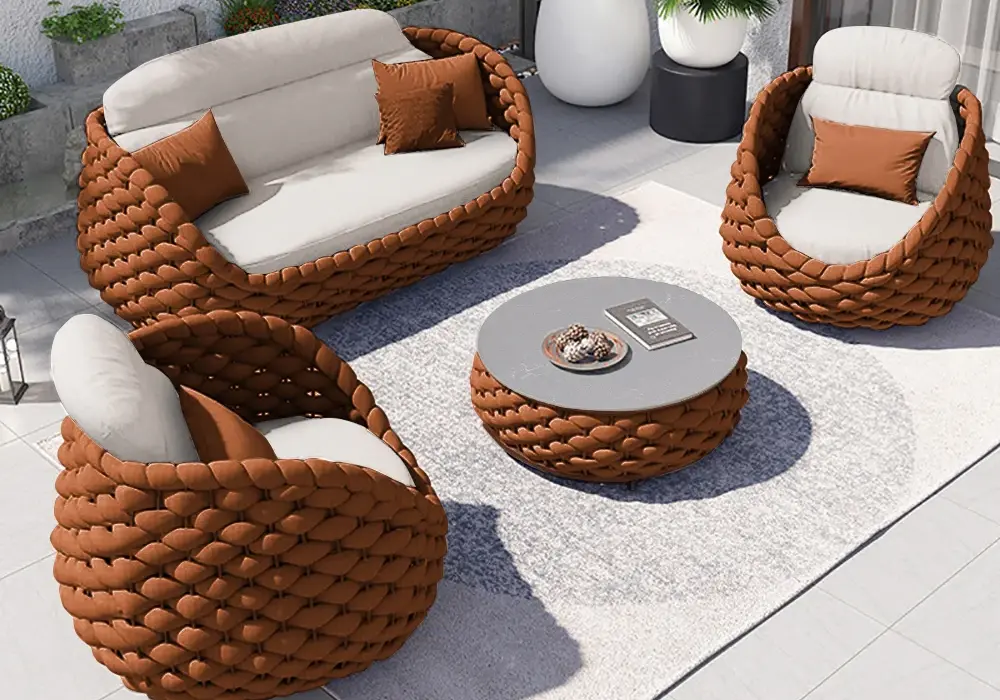
For a more decorative option, consider a Cocaro woven rope outdoor sofa set. This style combines an aluminum frame with woven rope detailing, offering a contemporary alternative to conventional metal patio seating. It is worth considering when you want outdoor furniture that balances a modern look with materials designed for outdoor conditions.
Teak
Teak is a dense hardwood containing natural oils that help it resist moisture and decay. With suitable construction and regular care, quality teak furniture can remain functional for many years.
One of its most distinctive features is how it ages. Untreated teak gradually develops a silver-gray patina, which many homeowners appreciate. If you prefer its original honey-brown color, you will need a suitable teak maintenance routine.
Teak is usually more expensive than many metal or synthetic alternatives. It is also heavy, and neglected furniture can still develop surface stains, mildew, or weather-related changes.
Best for: Premium patios, natural garden designs, and homeowners who appreciate real wood and are willing to maintain it.
High-Density Polyethylene (HDPE)
HDPE outdoor furniture, including products made from recycled plastic lumber, offers excellent resistance to moisture. It does not absorb water like untreated wood and will not rust or rot.
This material is appealing to homeowners who want durable outdoor seating without frequent refinishing. Quality HDPE furniture can tolerate rain and humidity with relatively little attention beyond routine cleaning.
However, it can be heavy, and premium designs may cost more upfront than entry-level plastic furniture. Color stability and surface quality also vary by manufacturer, so look for UV-resistance specifications.
Best for: Wet climates, family patios, and low-maintenance outdoor living spaces.
Synthetic Resin Wicker
Synthetic wicker uses woven plastic fibers over a supporting frame. Quality resin wicker provides a traditional woven appearance without the moisture sensitivity of natural wicker.
Its performance depends on both the fibers and the frame underneath. UV-stable resin can withstand outdoor exposure, but inexpensive fibers may become brittle, fade, or crack after prolonged sunlight. If the supporting frame is steel, damaged coatings can also lead to rust.
Best for: Covered patios, conversation areas, and homeowners who want a woven aesthetic with less maintenance than natural wicker.
Powder-Coated Steel and Wrought Iron
Steel furniture is strong, often affordable, and suitable for designs that need a sturdy frame. Powder coating helps protect the metal, but chips, scratches, and damaged welds can become entry points for moisture and corrosion.
Wrought iron is especially stable in windy conditions because of its weight. However, it needs periodic inspection and repainting to maintain its protective finish.
Neither material is the easiest choice for persistently wet, salty environments unless the coating and maintenance requirements are appropriate.
Best for: Sheltered patios, traditional garden designs, and locations where strength and stability are priorities.
Stainless Steel
Stainless steel can perform well in damp environments, and marine-grade stainless steel is often a strong choice for coastal furniture hardware and frames. However, stainless steel is not completely immune to corrosion, particularly when exposed to chlorides and neglected salt deposits.
Higher grades generally cost more, and metal surfaces can become hot in direct sunlight. Check the stated grade and recommended maintenance before placing furniture close to the sea.
Best for: Coastal settings and premium outdoor spaces where additional corrosion resistance justifies the cost.
Quick Comparison of Water-Resistant Patio Furniture Materials
Material | Main advantage | Main drawback | Typical maintenance |
Powder-coated aluminum | Lightweight and rust-resistant | Can dent or scratch | Clean and inspect coating |
Teak | Natural moisture resistance | Higher cost; color changes | Clean; oil if desired |
HDPE | Low maintenance and moisture-resistant | Can be heavy and expensive | Wash periodically |
Synthetic resin wicker | Attractive woven appearance | Low-grade fibers may crack | Clean and inspect the frame |
Powder-coated steel | Strong and affordable | Can rust through damaged coatings | Repair chips promptly |
Wrought iron | Heavy and stable | Requires corrosion protection | Inspect and repaint |
Stainless steel | Strong corrosion resistance with suitable grade | Expensive; salt deposits remain a concern | Rinse and clean regularly |
Which Materials Suit Your Climate?
The right choice also depends on where you live and how much weather exposure the furniture receives.
Climate or exposure | Materials to prioritize | What to watch for |
Tropical or humid | Aluminum, HDPE, quality resin wicker | Cushion drying and airflow |
Coastal salt air | Marine-grade aluminum, suitable stainless steel, HDPE | Salt deposits and hardware quality |
Hot, sunny conditions | UV-stable aluminum, HDPE, quality synthetic fibers | Fading and surface temperature |
Cold or snowy winters | Aluminum or HDPE with good drainage | Standing water and ice in joints |
Teak vs. aluminum: Choose teak if you prefer a natural appearance and accept the cost and care associated with real wood. Choose aluminum if lightweight construction, a modern look, and easier routine maintenance are more important.
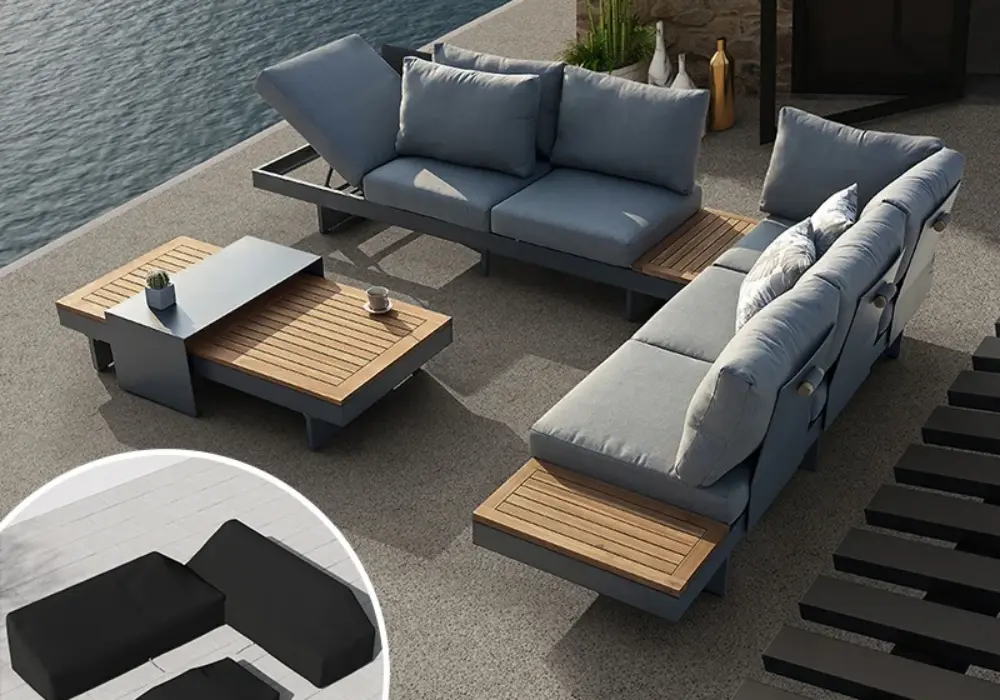
A sofa that combines these materials can offer a useful balance. For example, the Tevara teak and aluminum modular outdoor sofa set pairs teak accents with an aluminum frame in a modular design for outdoor lounging. Its included protective covers provide an additional option for protecting the set when it is not in use. As with any outdoor furniture, follow the manufacturer's guidance on exposure and care rather than assuming that a cover makes the entire set waterproof.
Even a durable frame can disappoint when its cushions remain wet, making fabrics, filling, and drainage the next things to evaluate.
Water-Resistant Cushions and Fabrics: How to Beat Mold and Mildew
Outdoor cushions are often the first part of a patio set to show weather damage. Fabric may resist surface moisture, yet water can still enter through seams, zippers, and stitching. Once the filling becomes saturated, slow drying can encourage mildew, unpleasant odors, and flattening.
The goal is not simply to buy cushions that repel water. It is to choose a combination of weather-resistant fabric, suitable filling, and effective drainage.
Choose the Right Outdoor Fabric
Solution-dyed acrylic is a popular option for premium outdoor cushions. Its color is incorporated into the fibers during production, helping it resist fading. Many fabrics in this category also have water-repellent finishes, although performance varies by product.
Polyester with a water-repellent finish can be a more affordable alternative. Check UV and moisture-resistance specifications, as untreated or lower-quality polyester may fade or wear more quickly.
Mesh fabric allows air and water to pass through easily, making it useful for poolside seating and chairs that need to dry quickly. However, it offers a different level of softness and appearance from traditional padded cushions.
Removable, washable covers are another practical feature. They make it easier to clean spills and remove dirt before it encourages mildew growth. A water-repellent treatment is helpful, but it should not replace regular drying.
Check the Cushion Filling and Drainage
Quick-dry, open-cell foam is designed to let water drain through its structure more readily than standard foam. When paired with breathable fabric and a well-designed seat, it can reduce drying time after rain.
Standard foam may retain moisture, particularly when cushions are thick or have limited airflow. Even quick-dry foam needs suitable drainage and ventilation; it should not be left sitting in standing water.
Before buying, check that:
- Seams are securely constructed and zippers are suitable for outdoor use.
- Covers can be removed for cleaning or replacement.
- Seats and cushion bases allow water to escape.
- Replacement cushions are available in the required sizes.
- The manufacturer explains whether cushions can remain outdoors during rain.
For poolside seating, rainy summers, and uncovered patios, prioritize quick-dry filling and breathable construction over a water-repellent surface alone. If you are comparing complete seating sets, start with the frame material and then check whether the cushion specifications match your climate.
During prolonged wet weather, move cushions to a dry, ventilated area whenever possible. This simple habit can help prevent mildew and extend the life of the fabric and filling.
How to Choose Water-Resistant Patio Furniture for Your Exposure and Budget
Start by assessing how much rain and moisture your outdoor area receives, rather than choosing a set solely for its appearance. The right level of protection depends on exposure, local weather, and how often you are willing to maintain the furniture.
Match the Furniture to Your Outdoor Space
Outdoor setting | What to prioritize | Suitable furniture approach |
Fully open patio | Corrosion resistance, drainage, quick-dry cushions | Aluminum or HDPE with outdoor-rated fabric |
Partly covered patio | Moisture-resistant materials and ventilation | Quality resin wicker, aluminum, or teak |
Coastal property | Salt-resistant frame and hardware | Marine-grade aluminum or suitable stainless steel |
Poolside area | Quick-drying fabrics and easy-clean surfaces | Mesh seating and quick-dry cushions |
Rental or small balcony | Lightweight, compact, easy-to-store construction | Folding aluminum chairs or stackable pieces |
Next, choose a set type that fits how you use the space. A dining set works for outdoor meals, while a conversation set or modular sofa creates a flexible social area. Loungers suit sunbathing and poolside relaxation, and compact folding furniture makes sense for small balconies or multipurpose spaces.
Measure the available area before buying. Leave enough clearance to pull out dining chairs, walk around furniture safely, and move pieces when the weather changes.
Set a Realistic Budget
Entry-level furniture can be practical for sheltered areas, occasional use, or short-term needs. Check the frame and cushion construction carefully, as inexpensive materials may have shorter outdoor service lives.
Mid-range options often include powder-coated aluminum, quality resin wicker, and replaceable cushions. This tier can provide a useful balance of appearance, durability, and maintenance.
Premium furniture may feature teak, HDPE, or higher-grade metal frames with more comprehensive warranties. The higher initial price can be worthwhile when the furniture is used frequently and exposed to challenging conditions.
Before purchasing, read independent reviews and look for photos showing how the product performs after extended use. Review the warranty, return policy, cleaning instructions, and exclusions for fading, rust, mold, or prolonged weather exposure.
Once your set is home, consistent care will have a major influence on how long it lasts.
How to Protect Patio Furniture from Rain, Mildew and Rust
Even weather-resistant patio furniture benefits from regular cleaning and drying. A simple maintenance routine helps prevent moisture from lingering in joints, cushions, and protective finishes.
Follow a Moisture-Focused Maintenance Schedule
Weekly: Wipe down tabletops, frames, and exposed surfaces to remove dirt, pollen, and moisture-trapping debris. Clean more frequently if your patio is near the sea or surrounded by trees.
After rain: Shake excess water from cushion covers and stand cushions on their edges in a ventilated area. Check seat bases for standing water, and allow all components to dry before stacking or covering them.
Monthly: Inspect metal frames for scratches, rust spots, loose screws, and damaged joints. Look for mildew on cushion undersides and in shaded areas where airflow is limited. Address small problems before they spread.
At the end of the season: Clean the furniture thoroughly, follow material-specific care instructions, and let every component dry completely. Cover or store the pieces according to the manufacturer's recommendations.
Use the Right Care for Each Material
For most aluminum, HDPE, and synthetic resin surfaces, mild soap and water are sufficient. Avoid harsh cleaners or abrasive tools that may damage finishes.
Teak can generally be cleaned with an appropriate wood cleaner. Oiling is optional and is mainly used when maintaining a particular appearance; it is not a substitute for cleaning or proper drying.
For powder-coated steel and wrought iron, repair chips with a compatible touch-up product before corrosion develops. Follow the manufacturer's instructions rather than assuming any paint will provide adequate protection.
Salt air requires particular attention. Rinse suitable metal surfaces and hardware periodically with fresh water, then allow them to dry. This helps remove deposits that can contribute to corrosion.
Choose Covers That Let Furniture Breathe
A well-fitted outdoor cover can reduce direct rain exposure, dirt, and debris. However, a cover that traps condensation may leave furniture damp for extended periods.
Choose a cover designed for outdoor furniture, with suitable ventilation and enough room to avoid holding water on top. Secure it without blocking drainage. Remove it periodically during dry weather to allow airflow, and never cover wet cushions or furniture before they have dried.
Before strong winds, hail, or heavy snowfall, secure lightweight items or move them to a protected location. In winter, store removable cushions indoors when possible and prevent water from collecting and freezing in joints.
The best protection combines suitable materials, sensible drainage, and routine care—not a cover alone.
Frequently Asked Questions
What is the difference between waterproof and water-resistant patio furniture?
Waterproof products are designed to prevent water penetration under specified conditions. Water-resistant furniture tolerates some moisture but may still be damaged by prolonged rain, standing water, or saturated cushions.
Which patio furniture material lasts longest in rain and humidity?
Quality teak, HDPE, and well-made aluminum furniture can all perform well. Longevity depends on construction, drainage, UV exposure, maintenance, and whether the material suits your climate.
Is teak or aluminum better for an uncovered patio?
Aluminum is usually lighter and easier to maintain, while teak provides a natural look and can age beautifully. Choose based on your preferred appearance, budget, and willingness to care for wood.
How do I stop outdoor cushions from absorbing water and growing mildew?
Choose quick-dry open-cell foam, breathable outdoor fabric, and cushions with effective drainage. After rain, stand cushions on edge and dry them thoroughly before covering or storing them.
Should I cover or store patio furniture during storms and winter?
Use breathable, well-fitted covers when appropriate, and move removable cushions to a dry area. Secure lightweight furniture before storms and store vulnerable items when winter conditions exceed their outdoor ratings.