

The best long-lasting outdoor furniture is a well-built piece matched to its location, with a care routine you can keep up and components you can get support for. When comparing outdoor sofa sets, look past the material headline to frames, joints, cushions, finishes, and moving parts. Teak, aluminum, HDPE, synthetic rattan, and other materials all have a place, and the right one depends on your patio.
Durable furniture also has to stay comfortable and practical. A frame that endures is less useful if the cushions can't be maintained or the seating never suited the space, so think about the whole piece and what owning it involves.
Start with exposure, then assess materials, construction, and service. That order helps you choose for the conditions the furniture will actually face.
Table of Contents
Define What Long-Lasting Means for Your Household
Decide which outcome matters most: a sound structure, a particular appearance, comfortable cushions, or the ability to maintain and replace components. These goals overlap but are not identical.
Some owners welcome the natural silver-gray of weathered wood; others want the original color to stay put. A worn cushion cover is a simple fix when replacements are available, while another household may prefer a different seating format entirely.
Consider how often you'll use it, too. Furniture used every evening needs a care routine that fits daily life, and a set that is awkward to cover or clean tends to get less attention than it deserves.
Write a short ownership brief before comparing products: the setting, who will use it, where it will be stored, which appearance changes you accept, and which maintenance tasks you'll actually perform. Use that brief to judge the whole purchase.
Match the Furniture to Its Actual Exposure
Describe the location precisely. Note how much shelter it has, whether water collects nearby, how the furniture will be protected when unused, and whether it sits near a pool or the coast. A broad climate label can miss the conditions on your particular patio.
Ask the manufacturer about demanding exposures. Salt air, pool chemicals, sustained moisture, and intense sun each stress furniture differently, so confirm that a product is suited to yours.
For wood, the USDA Forest Products Laboratory distinguishes weathering from decay and highlights the roles of species, protection, and exposure. In practice, that means judging a wood product together with its finish and placement rather than relying on the species name alone.
Plan protection you can carry out. If the furniture needs covering, moving, or storing, decide how that will happen before you buy.
Outdoor Furniture Materials Compared: General Characteristics
The summaries below describe what each material is generally known for. Actual performance varies with grade, finish, construction, and climate, so treat them as a starting point for questions to ask.
Teak
- Strengths: Naturally oily wood that is typically resistant to moisture and insects, and it ages to an attractive silver-gray if left untreated.
- Trade-offs: Usually among the pricier options and fairly heavy. The color will gray over time unless you maintain it, and quality depends on the grade of the wood.
- Typical maintenance: Wash periodically with mild soap and a soft brush. Teak sealer or oil is optional and mainly for holding the golden tone.
Aluminum
- Strengths: Lightweight, easy to rearrange, and typically does not rust. Powder-coated finishes offer many color choices.
- Trade-offs: Light frames can shift in strong wind, and thin-walled pieces may dent. Coatings can chip, and in harsh coastal settings, exposed metal may corrode or pit depending on the alloy and finish.
- Typical maintenance: Rinse with mild soap and water, rinse off salt or pool residue, and touch up chips in the coating promptly.
Stainless Steel
- Strengths: Strong and corrosion-resistant, with a clean, modern look. Higher grades such as marine-grade stainless are generally better suited to salty air.
- Trade-offs: Heavy and often costly. Surfaces can get hot in direct sun, and lower grades may show surface rust or staining in coastal or humid conditions.
- Typical maintenance: Wipe with a non-abrasive cleaner along the grain, and rinse regularly if you are near salt water.
HDPE (High-Density Polyethylene)
- Strengths: Typically colored all the way through, so scratches show less, and it generally doesn't absorb water or need painting. Many products are UV-stabilized.
- Trade-offs: Often heavy and priced above basic resin. Under very high heat it may soften or warp, and quality varies by manufacturer.
- Typical maintenance: Mild soap, water, and a soft brush are usually enough.
Synthetic Rattan (Resin Wicker)
- Strengths: Lightweight, with a handwoven look at a range of price points. It usually resists moisture better than natural wicker.
- Trade-offs: Quality varies widely. Thin strands may fade, become brittle, or fray under strong UV exposure, and the frame beneath determines much of the lifespan.
- Typical maintenance: Brush or vacuum debris, clean with mild soapy water, and avoid high-pressure washing that can lift the weave.
Wrought Iron
- Strengths: Heavy, stable, and wind-resistant, with a classic, ornamental look.
- Trade-offs: Prone to rust if the coating is damaged, and difficult to move. Metal can feel very hot or cold depending on the season.
- Typical maintenance: Inspect the finish regularly, touch up chips with rust-inhibiting paint, and keep the furniture dry or covered when you can.
Material | Often chosen for | Watch for |
Teak | Natural look, sheltered or varied climates | Price, graying, weight |
Aluminum | Lightweight, rust-resistant frames | Chipped coating, wind, salt exposure |
Stainless steel | Modern look, strength | Cost, heat, grade quality |
HDPE | Low upkeep, wet or sunny settings | Weight, extreme heat, quality range |
Synthetic rattan | Woven look, budget range | UV fading, strand and frame quality |
Wrought iron | Stability, classic style | Rust, weight |
Compare the Complete Construction, Not Just the Surface
Read the frame, outer material, top, cushion cover, and fill separately. Mixed-material furniture gives different jobs to different components, such as a woven exterior around a metal frame or teak details alongside aluminum supports.
Look for clear assembly and care information, find where the connections are, and check them as directed. A substantial appearance doesn't prove better construction, and a light-looking form can suit the intended use perfectly well.
Whatever you shortlist, check the details that matter for your site: the frame finish, the cushion cover and fill, the table surface, and any moving parts. Each one is its own ownership question.
Recommended Setups by Scenario
The examples below show how the checklist above applies to specific sets. Check current specifications and package contents when ordering.
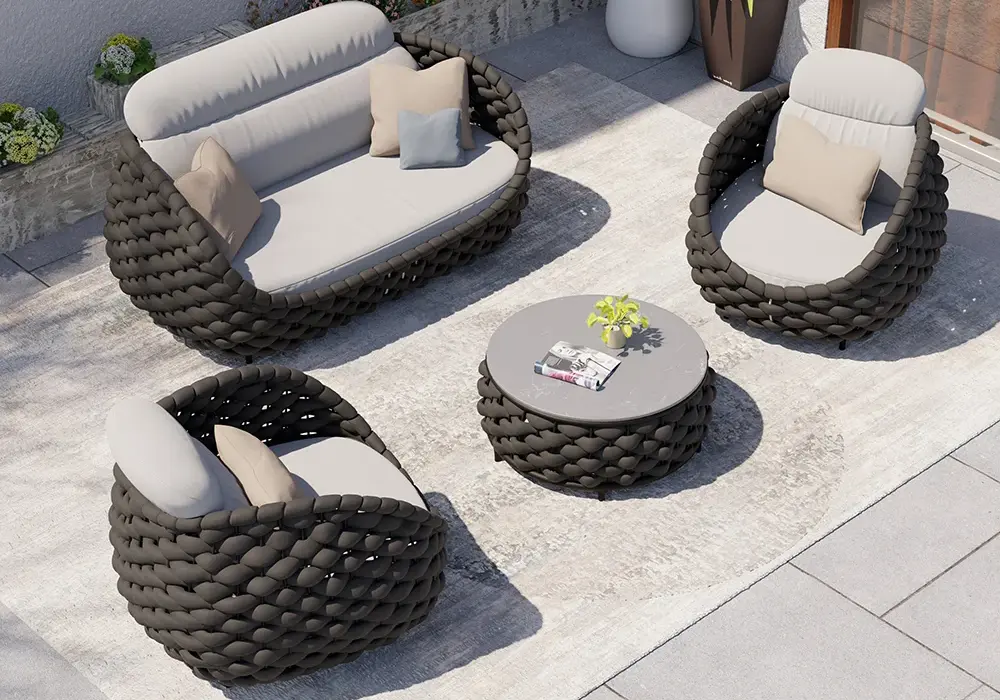
Coastal or Poolside Patios: Favor Corrosion-Resistant Aluminum or HDPE
Salt air and pool chemicals are among the toughest conditions for outdoor furniture. Aluminum frames and HDPE are generally good starting points here, because they don't rust the way untreated steel or iron can. Rinse the furniture with fresh water regularly and keep the coating intact.
The Cocaro four-piece outdoor handwoven rope sofa set combines an aluminum frame with rope detailing, a loveseat, swivel chairs, and a coffee table. That makes it a reasonable candidate for a coastal-leaning shortlist. Ask about the rope care, the frame finish, and swivel maintenance.
Rainy or Humid Climates: Prioritize Drainage and Ventilation
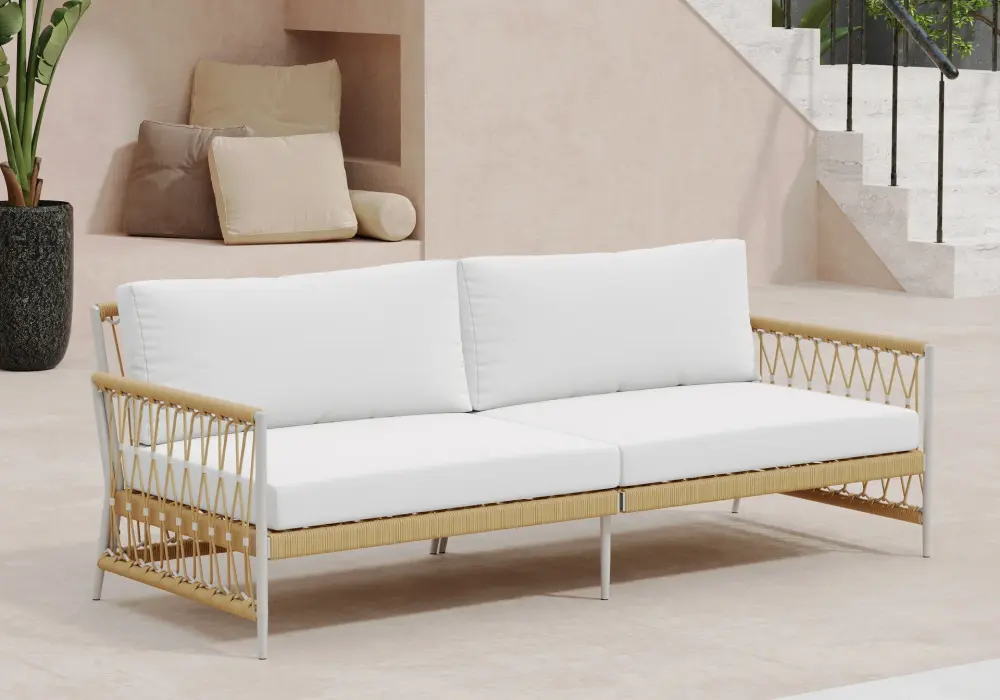
Where moisture lingers, good airflow matters as much as the material. Choose designs that shed water, and leave space between the furniture and walls or covers so surfaces and cushions can dry. Cushion fill and cover fabric deserve extra attention, since trapped moisture is a common cause of mildew.
The Ropipe three-seater outdoor rope-weave and aluminum sofa with white cushions has an aluminum frame and removable cushion covers, which makes it easier to air out and clean. Confirm the cover care instructions and dimensions, and keep the exact product identity in case you need replacements.
Strong Sun: Look for UV-Resistant Fabrics and Coatings
Intense sunlight fades fabrics, dries out finishes, and can make woven strands brittle. Look for UV-resistant cushion fabrics, UV-stabilized resin or rope, and durable powder-coat or sealant finishes. Light-colored cushions can run cooler in direct sun, and a shade structure or covers during idle periods extend the life of every material.
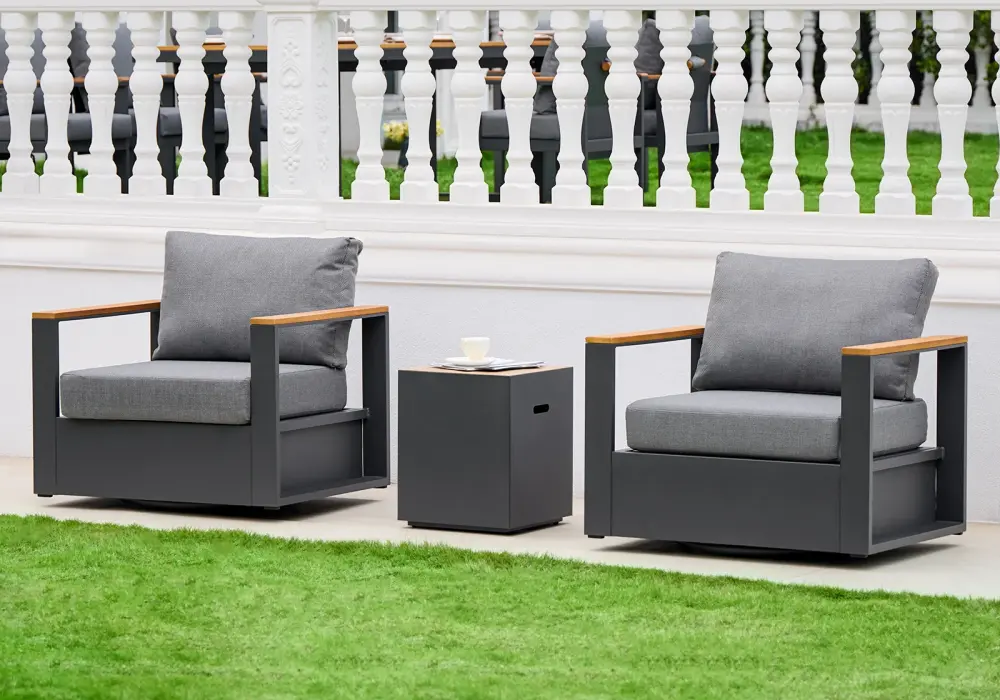
Sheltered Patios Where You Want a Natural Look and an Added Feature
If the space is covered or shaded and you like the warmth of wood, mixed teak-and-aluminum designs offer both. The Tevara outdoor teak-and-aluminum swivel lounge chairs pair wood details with an aluminum structure, cushioned seating, and a swivel function. Ask for the operating and maintenance guidance for the swivel, and find out how it can be serviced.
Give Cushions Their Own Durability Assessment
Cushions often need care or replacement on a different schedule from the frame. Identify the cover material, fill, cleaning method, drying requirements, and storage guidance for each set.
Ask for the cover and cushion dimensions if future replacement matters to you. A similar-looking cushion from another sofa may not have the right shape or attachment arrangement.
Pick a color and fabric you can live with. A shade that shows debris more clearly simply calls for a slightly different cleaning habit.
Ask About Support Before You Buy
A long-term purchase is easier to assess when you know how service questions are handled. Ask which components can be identified separately, whether replacement parts are currently offered, and what information support will need from you.
Read the current warranty for the actual product and location: what is covered, what maintenance is expected, and how a claim is made. Keep receipts, product identification, instructions, and photos together, since accurate records make any support conversation faster and more specific.
Make Protection and Cleaning Convenient
Locate storage before the furniture arrives. Measure the space you'll need for cushions and any pieces that need protection, and make sure access stays practical in the seasons you use the furniture.
Choose covers according to the furniture's requirements and the cover's own instructions, checking fit, securing, and ventilation. Use cleaners and tools recommended by the manufacturer for each component, because treatments suited to one material or brand may not suit another.
Build small tasks into everyday use: put loose items away, deal with spills promptly, and watch for a connection or surface that needs attention. Small, regular habits beat one large seasonal cleanup.
Evaluate Cost Without Guessing at a Lifespan
Compare the complete purchase cost, including covers, delivery, and any other components you know you'll need, and keep the assumptions the same across candidates.
A cost-per-year estimate is useful when the service life is treated as a hypothetical. For illustration, a $1,200 set used for six years averages $200 per year before upkeep. If changing the assumed lifespan flips your preferred option, spend more time on care, support, and construction details.
Count comfort and usable space in the value, too. Furniture that holds up but stays uncomfortable doesn't serve a household well.
Inspect and Reassess Regularly
Follow the product's inspection and maintenance guidance, including checks after assembly and after periods of heavy exposure. Look for damaged surfaces, loose components, tired cushions, and changes in how a moving part operates.
For repairs, get advice specific to the affected component and material. If a problem affects safe use, stop using that part until it is resolved.
Revisit placement when the patio changes. A new planter, a roof runoff route, or a different storage arrangement can alter exposure and access, and your care routine should adjust with it.
Frequently Asked Questions
Which outdoor furniture material lasts the longest?
No single material wins everywhere. Teak, aluminum, stainless steel, and HDPE are all widely used for durable outdoor furniture, and the best fit depends on your climate, construction quality, finish, and upkeep. Match the material to your exposure rather than relying on a ranking.
What is best for coastal or poolside use?
Corrosion-resistant options such as aluminum with an intact coating, marine-grade stainless steel, and HDPE are generally good places to start. Rinse regularly to remove salt and chemical residue.
Does a longer warranty mean the furniture will last longer?
Not necessarily. A warranty describes what is covered and under what conditions. Read the exclusions, maintenance requirements, and claim process, and weigh it alongside construction and support information.
Are removable cushion covers always better?
They can make airing and cleaning easier, but check how each cover should be washed, dried, and stored, and whether replacements are available.
How can I judge durability without hands-on testing?
Collect the exact materials, intended exposure, assembly and care information, warranty terms, and current service options. Ask focused questions about anything unclear before you buy.